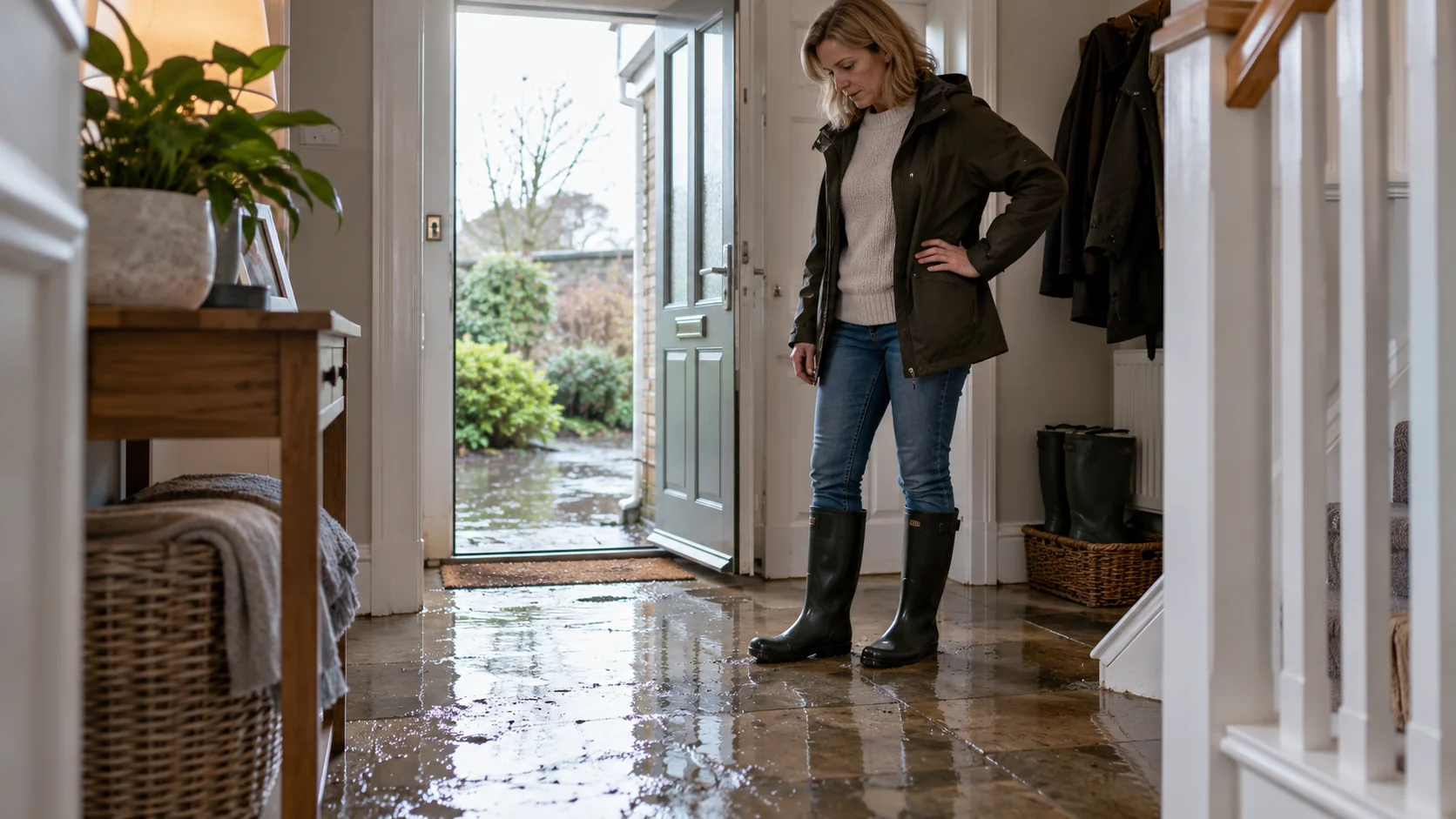
What you can see is not the whole damage
Kitchen units often conceal the worst effects of low-level flooding. Water can sit under plinths and behind base cupboards while the visible doors appear almost normal. You may notice an unpleasant smell or a swollen edge long after the floor surface seems dry.
Before dismantling fitted furniture, photograph the affected areas and ask the insurer how inspection and removal should be handled.
Remove kickboards only when it is safe to do so and when any insurance evidence has been recorded. Water can remain beneath a kitchen long after the exposed floor has dried. Look for swelling along cut edges of cabinet panels, loose hinges, distorted plinths and odours from enclosed voids. A laminated door may appear serviceable while the chipboard carcass behind it has lost strength. The presence of water also raises questions about nearby sockets, appliances and concealed plumbing connections, not just joinery.
Construction materials matter
Many modern kitchen carcasses use chipboard or MDF. Once these materials swell and lose strength, repair may not give a reliable result. Solid timber, metal fittings and some doors can sometimes be cleaned and reused, but each item needs an individual assessment.
It is worth separating the condition of the cabinet doors from that of the hidden carcasses and plinths.
Replacement decisions should be itemised. It may be possible to retain sound wall units, worktops or door fronts, while replacing water-damaged base cabinets. However, matching colours and profiles may be difficult, particularly with older kitchens. Ask the contractor to distinguish structural or hygiene concerns from a preference for a completely new design. If the claim involves an insurer, seek agreement on the scope before removing serviceable fittings. Keep photographs of concealed damage discovered during dismantling.
Hidden spaces need checking
Remove access panels only when it is safe and agreed with the insurer. Contaminated water, damaged sockets, appliance connections and sharp debris may be concealed under the units. An electrician should assess flood-affected circuits and appliances before they are used.
Do not assume the floor beneath the kitchen is dry just because the surrounding room has been ventilated.
New units should not be fitted over wet wall bases or a floor construction that has not recovered. Ask what evidence supports the drying decision. In a repeatedly flooded property, some owners choose raised electrical services, accessible plinths and more water-tolerant finishes. Those changes must still comply with electrical and plumbing requirements, and they do not make a room immune to flooding. The goal is simpler cleaning and recovery, not a promise that future floods will cause no damage.
Avoid replacing units too early
Installing a new kitchen over wet floor construction or wall bases can trap moisture and spoil the replacement. Where drying is being managed professionally, ask for records and an explanation of the criteria used to decide when reinstatement can begin.
The timetable will depend on flood depth, construction and contamination; there is no dependable universal number of days.
Match the repair to the actual loss
It may be possible to replace damaged base carcasses while keeping undamaged wall units and fittings. On other occasions, matching finishes or unsafe contamination may justify more extensive work. Get a clear schedule of what is retained, what is replaced and what is excluded.
If the layout is changing, distinguish ordinary refurbishment costs from insured flood reinstatement.
Plan for another event
In a property with a known flood history, you may want raised appliance connections, accessible plinth details and finishes that are easier to clean. Discuss compatibility with electrical and plumbing requirements before the new kitchen is fitted.
The objective is not a supposedly floodproof kitchen, but a room that can be made safe and recovered more readily.
Ask what is included in the replacement price
A quotation should distinguish replacement carcasses, doors, worktops, plumbing reconnections, appliance checks and making good to walls and floors. Confirm who is responsible for checking the space behind and beneath the units, and do not allow new fitted cupboards to conceal construction that has not finished drying. Retaining sound elements may be economical, but they must be compatible with the proposed new work.
Official guidance and independent advice
Flooding can become dangerous quickly. Use official warnings and advice during an incident; this article is not a live risk assessment.
Prepare for flooding · Flood-proofing and recovery · National Flood Forum · Citizens Advice