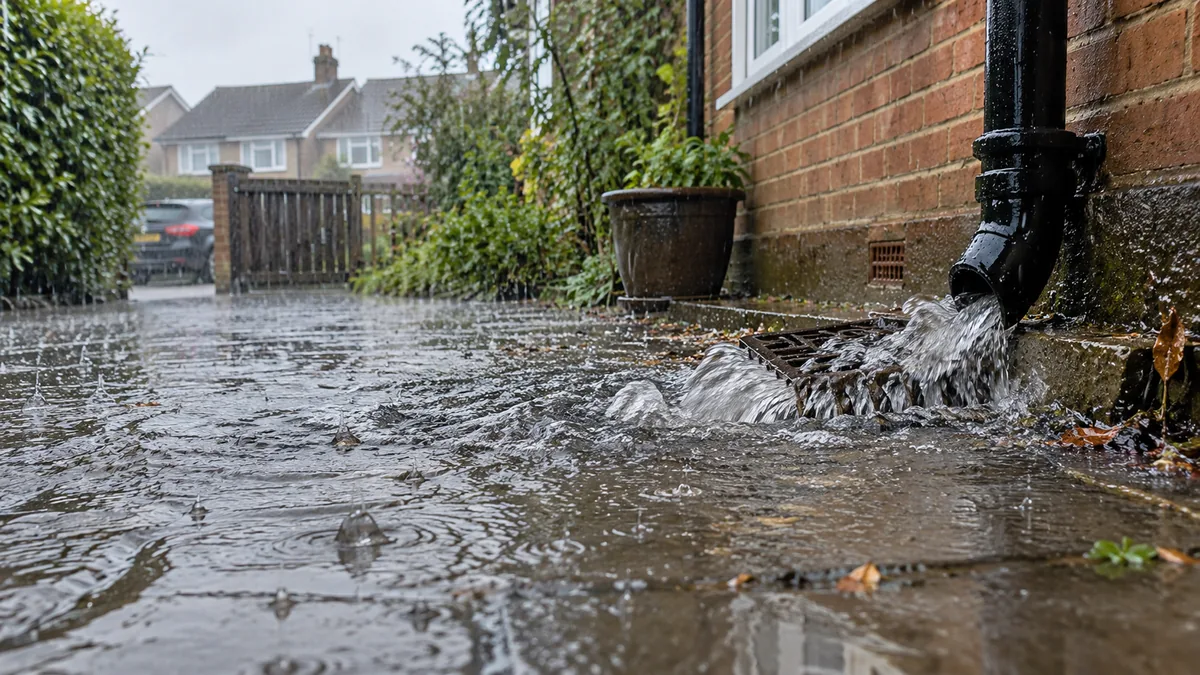
A flood does not always mean a blockage
If water rises from a drain only during exceptional rain, the system may be overloaded. But debris, grease, root intrusion, pipe damage or a collapsed section may also be contributing.
Try to distinguish a blockage from a drainage system being temporarily overwhelmed. If a gully overflows after a short shower, inspect for leaves or debris around the opening only where it is safe to do so. If several gullies surcharge at once during intense rainfall, the issue could be further down the system or beyond the property's boundary. A single slow sink is a different clue from wastewater rising in an outside chamber. Avoid lifting heavy or pressurised covers during flooding, and keep clear of any water that may contain sewage.
Identify which drain
A gully beside your kitchen, a shared sewer beneath the garden and a road gully can have different owners. Public sewers are usually a water company matter; highway drainage often belongs to the highway authority.
A contractor should identify which drains carry rainwater and which carry foul water. Older properties sometimes have combined systems, but connections should not be guessed from the position of downpipes. Ask whether cleaning alone is likely to provide a lasting solution and whether a camera survey is warranted after repeated problems. If a pipe is structurally defective, another jetting visit may clear the immediate obstruction without addressing the underlying fault. Get a written account of what was found and the part of the system inspected.
Look for other symptoms
Slow-flowing sinks, toilets backing up or foul smells may suggest a restricted foul drainage system. Clean rainwater overflowing from a channel drain may point instead to surface-water disposal.
If water is backing up from a public sewer, report the incident to the sewerage provider. You should also photograph damage and check your insurance position before authorising expensive excavation. Many drainage disputes turn on pipe ownership and the point at which runs join. A contractor may be able to explain the layout, but the water company is the appropriate organisation to confirm responsibility for its assets.
When to call the water company
If sewage is emerging from a public sewer, or several properties are affected, contact your water company promptly. Do not pay for private work until responsibility is clearer.
What a contractor can check
A drainage specialist can investigate private drains, clear obstructions and, if necessary, use CCTV to look for damage. Ask for the findings and footage if substantial repairs are proposed.
Safety comes first
Floodwater mixed with sewage poses a health risk. Keep children and pets away and avoid handling contaminated waste without proper precautions.
Reliable further information
For current warnings, official flood-risk maps and safety advice, use the relevant government service. This website cannot assess live conditions at your home.
Government flood guidance · National Flood Forum · Citizens Advice