All flooding guides
Find a specific household problem or browse by subject. Every guide explains what to check and when professional help may be useful.
Flood risk

How to check whether your house is at risk of flooding
Start with the official maps, but understand what their results can and cannot tell you.
Read the guide
Flood alert, flood warning or severe flood warning?
Know what the messages mean, and what action to take as conditions change.
Read the guide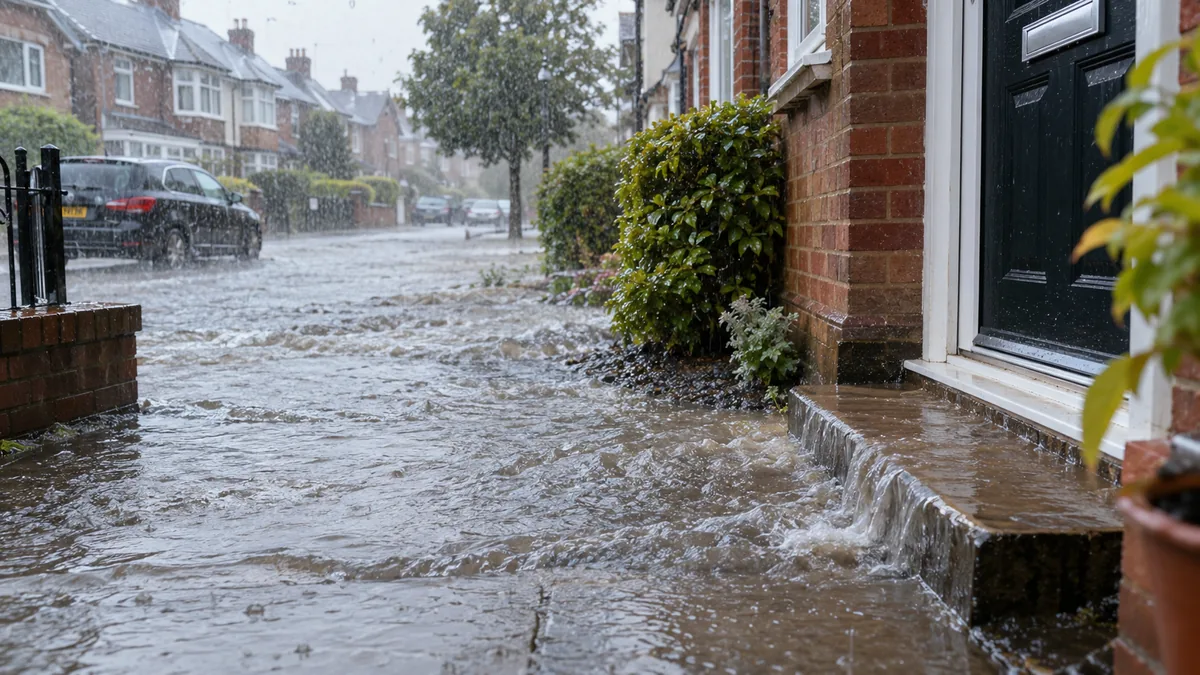
Can heavy rain flood a house nowhere near a river?
Surface-water flooding can affect properties on otherwise ordinary streets.
Read the guide
Can you insure a house at risk of flooding?
Understand the difference between risk mapping, insurance terms and the Flood Re scheme.
Read the guide
Buying a house in a flood-risk area
Questions to investigate before exchange, even if the property looks completely dry.
Read the guideUrgent problems

Sewage coming into your home during heavy rain
How to respond safely when wastewater comes back through a toilet, drain or shower.
Read the guide
Water in the cellar or basement after rain
A flooded cellar needs diagnosis before waterproofing is proposed.
Read the guide
Water coming through the front door in heavy rain
Water at the threshold can come from an unusually intense cloudburst, runoff from the road or a paved area that falls towards the house.
Read the guideDrains & water
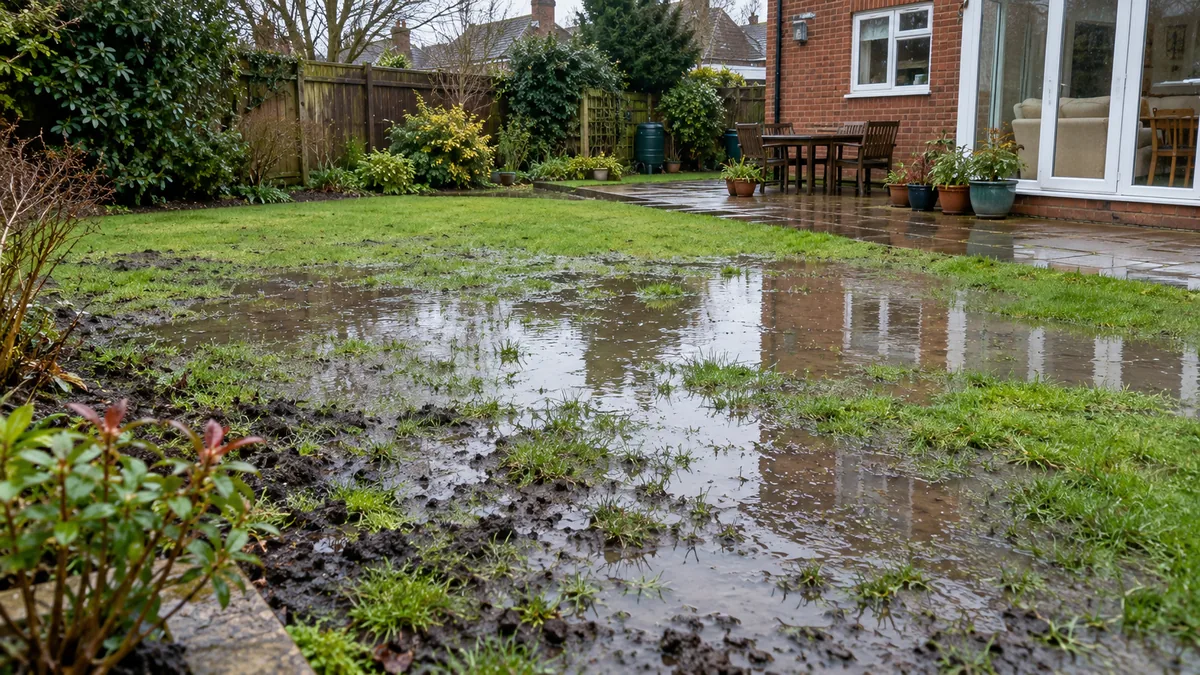
Why does my garden flood every time it rains?
Standing water can come from soil conditions, poor levels, blocked outlets or a high water table.
Read the guide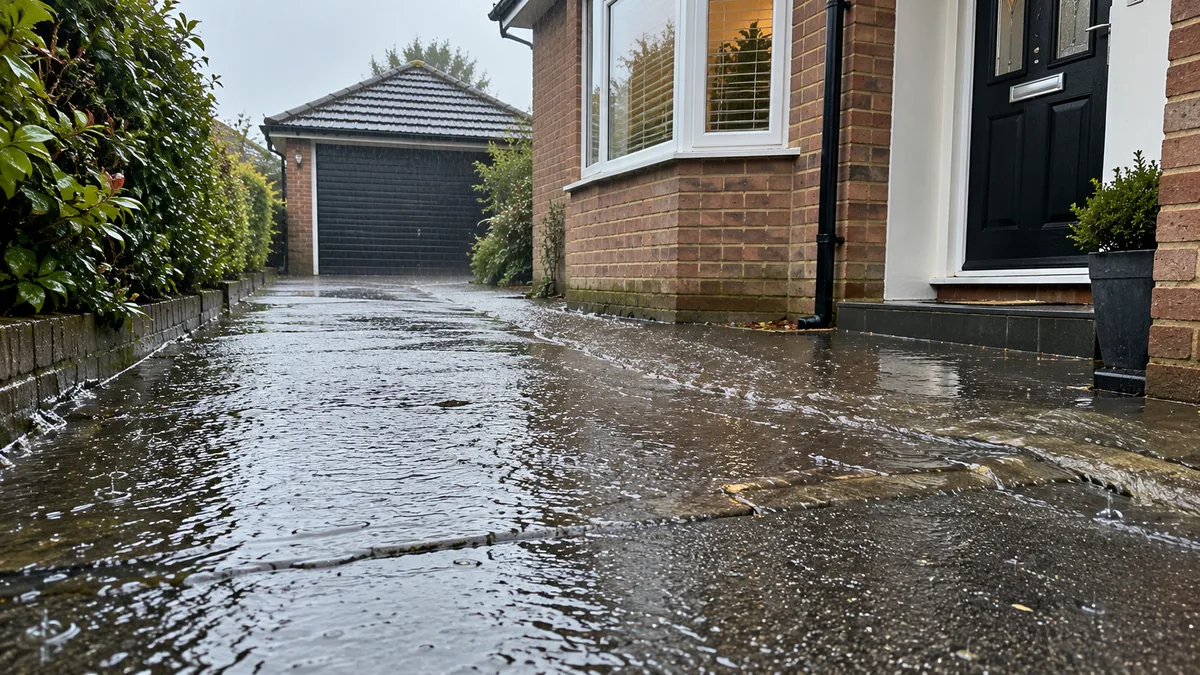
Water running off the driveway towards your house
A slope towards a doorway or garage can turn a short downpour into a serious problem.
Read the guide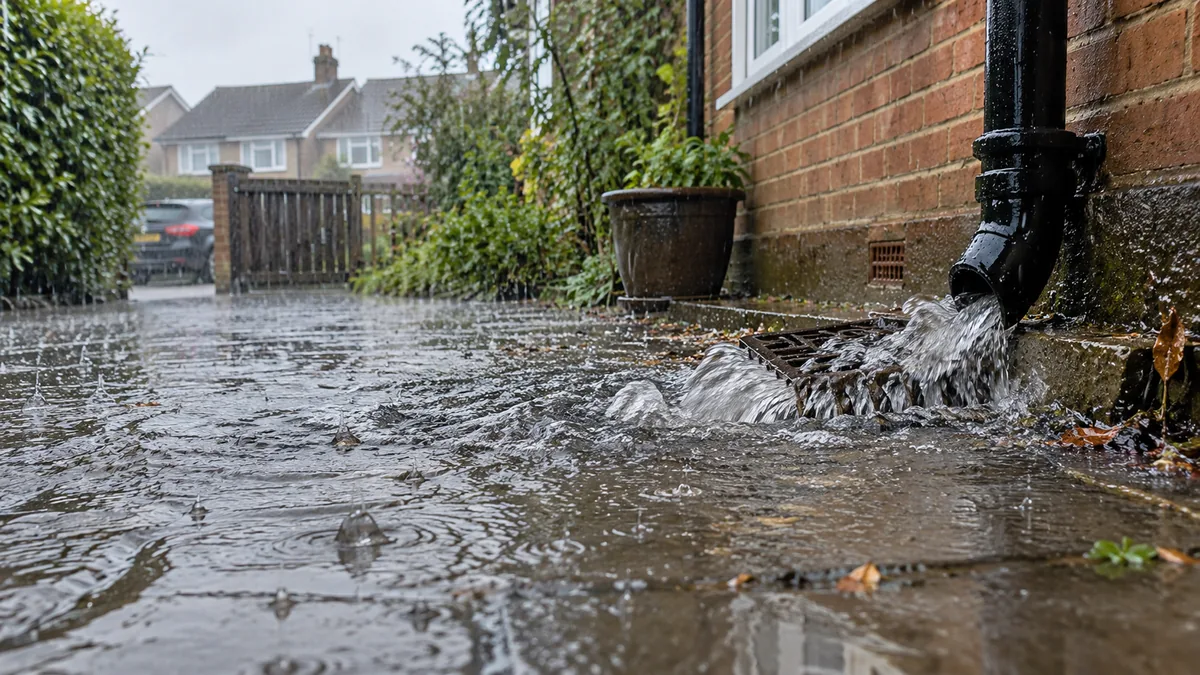
Drains overflowing in heavy rain: who is responsible?
Find out whether you have a blockage, an overloaded system or a public drainage problem.
Read the guide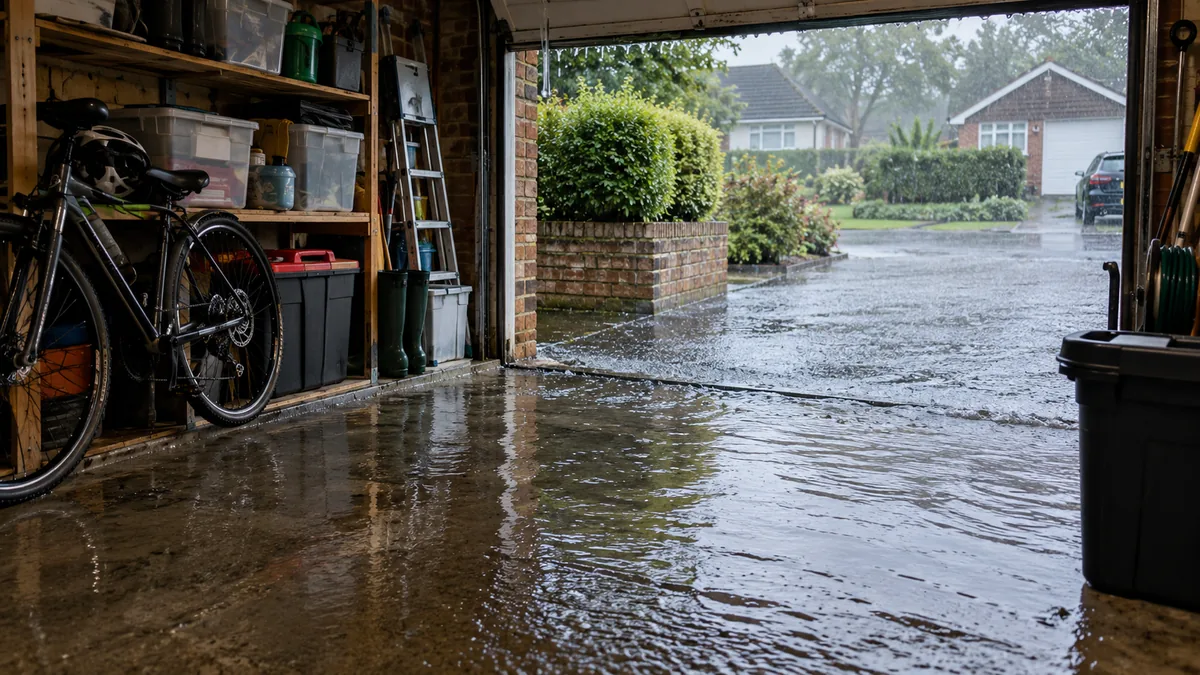
Garage floods whenever it rains
Water entering a garage is often a levels and drainage problem, not just a bad door seal.
Read the guide
Rainwater running into your garden from next door
Understand what is happening before changing boundaries or laying drains.
Read the guide
Heavy rain pouring through a flat roof
Ponding, blocked outlets and defective details can cause serious water ingress.
Read the guide
Will a drainage channel stop my patio flooding?
A channel drain intercepts surface water across a path, patio or driveway.
Read the guide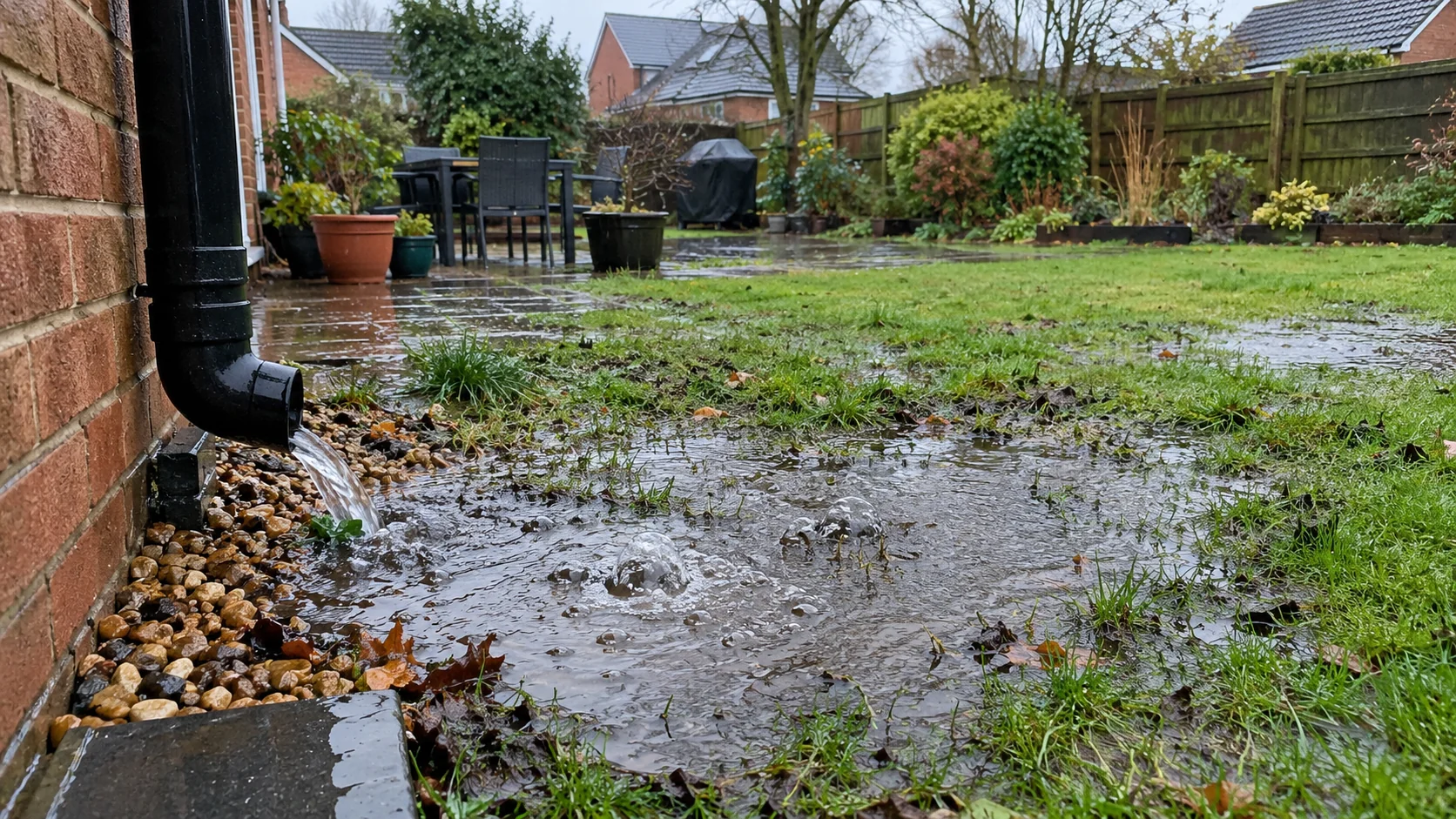
A soakaway keeps overflowing — what might be wrong?
A soakaway lets suitable rainwater disperse into surrounding ground.
Read the guide
Who pays when a shared drain floods the garden?
A foul drain carries wastewater from appliances and toilets, while a surface-water drain carries rainfall where separate systems exist.
Read the guide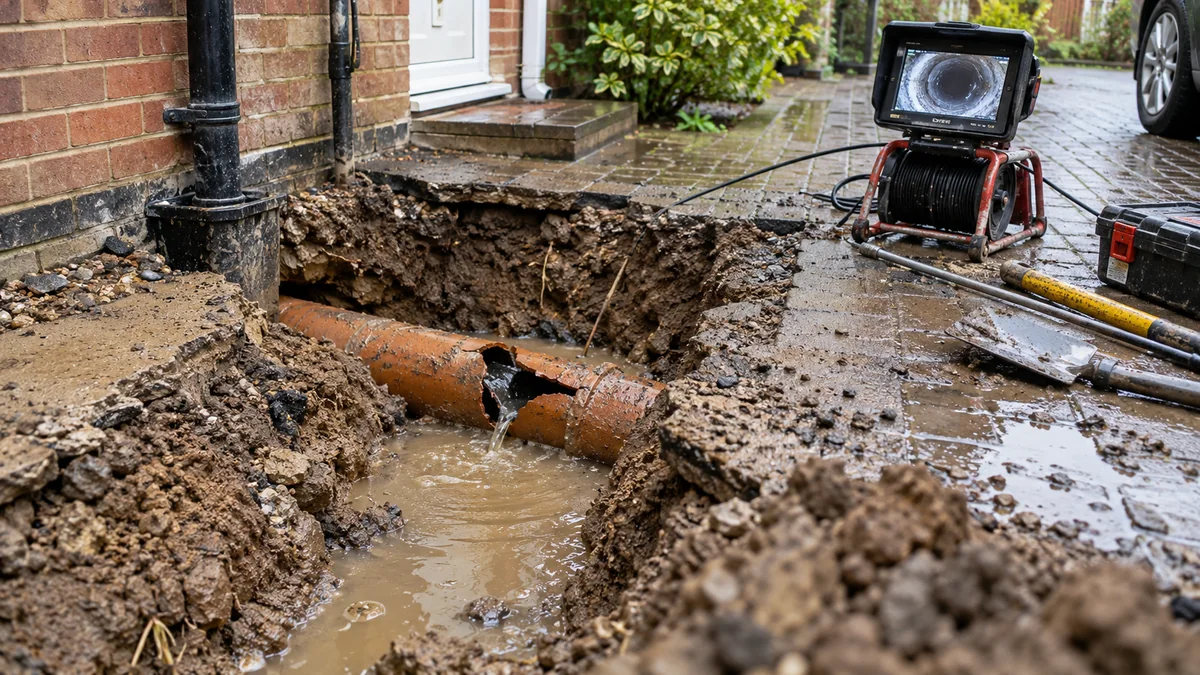
Could a collapsed drain be causing flooding around your house?
A failed drain can lead to standing water, repeat blockages, soft ground and washout around the property.
Read the guide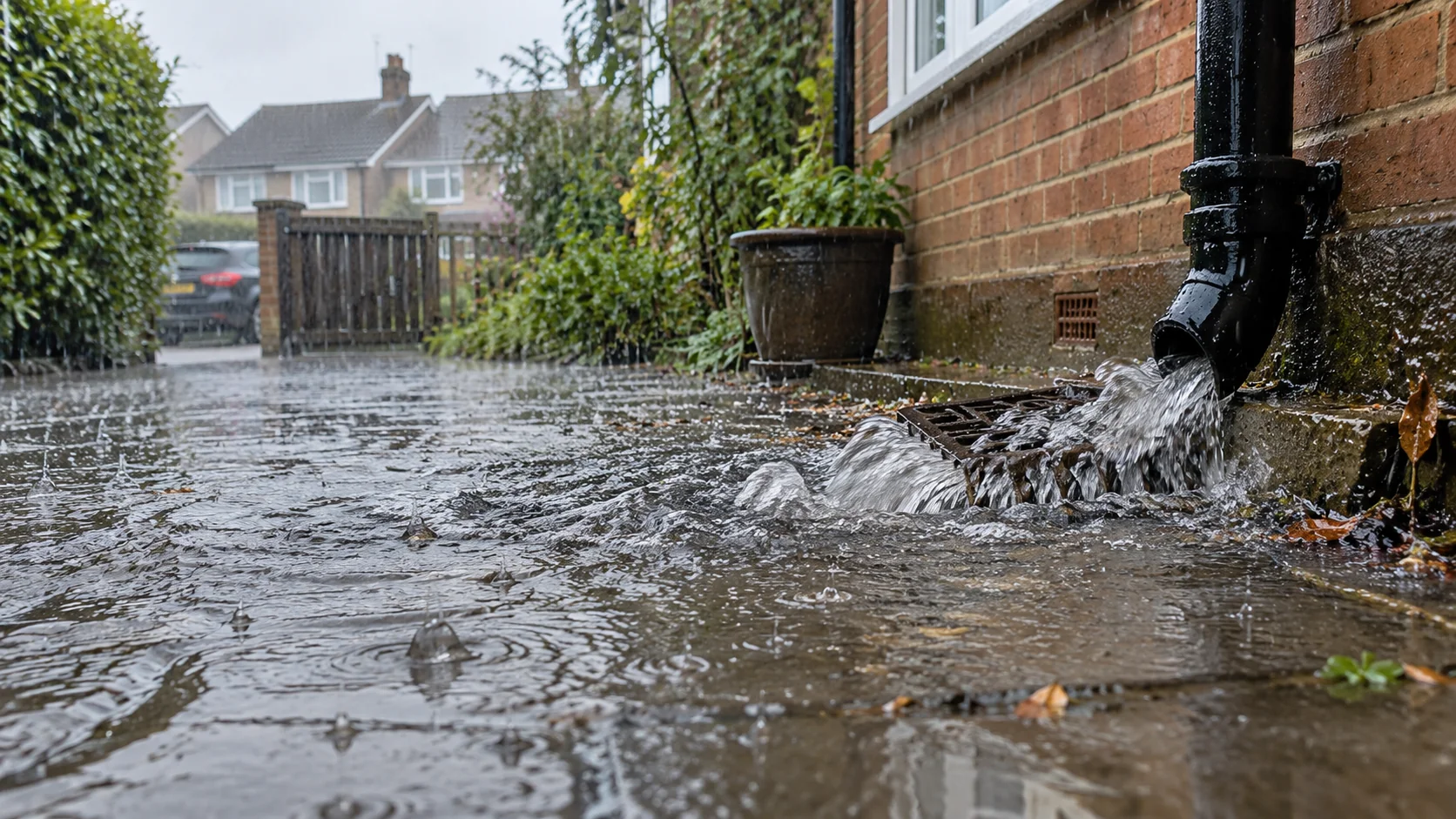
Rainwater pouring from a downpipe beside the house
A downpipe that overflows or discharges against a wall may be exposing a simple blockage or a much larger drainage fault.
Read the guide →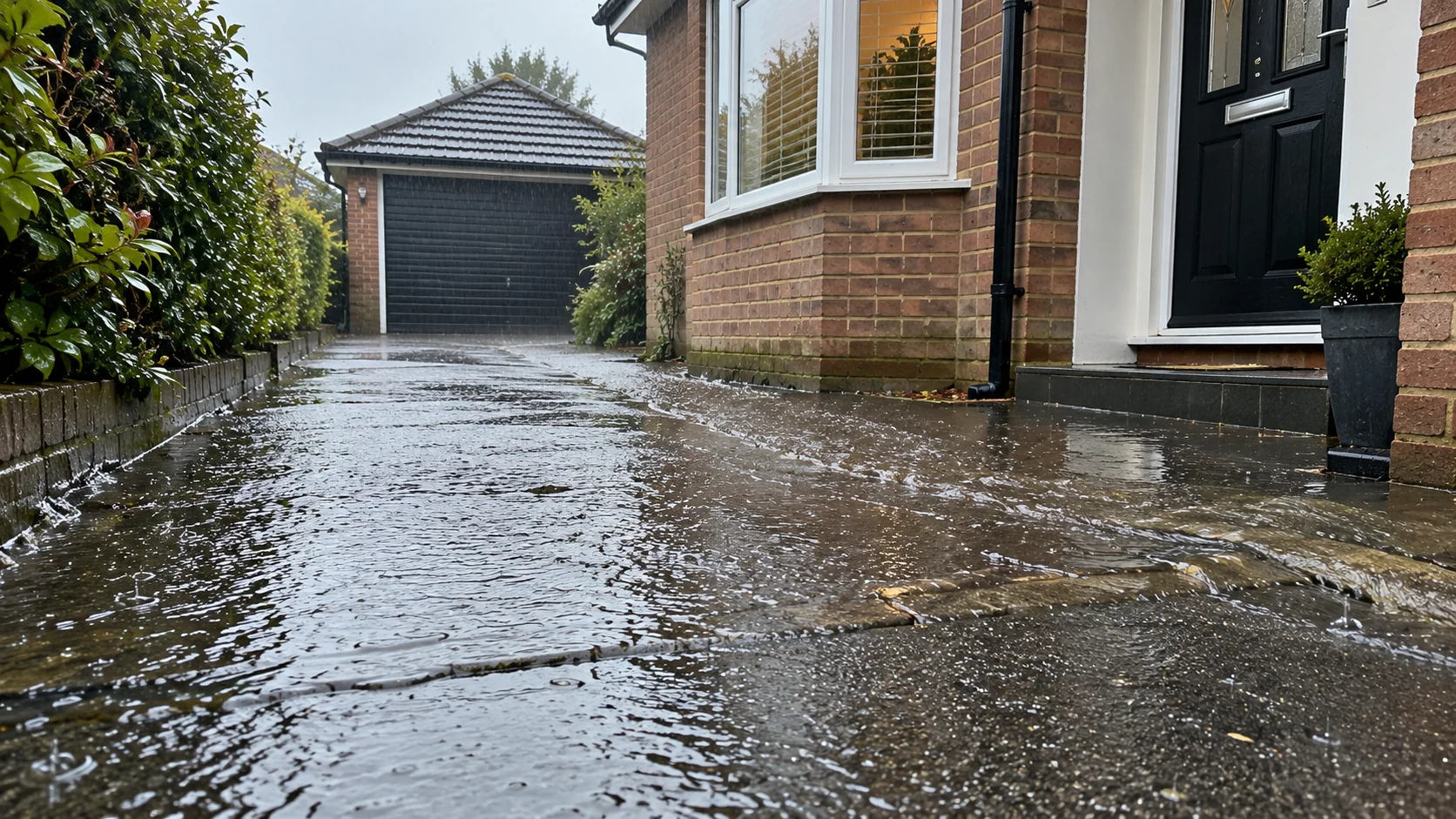
Driveway channel drain overflowing in heavy rain
A channel drain may be perfectly clear at the surface yet still overflow because the outlet or receiving system cannot take the water.
Read the guide →Protect your home

Can floodwater enter through air bricks?
Air bricks and low vents can become entry points during external flooding.
Read the guide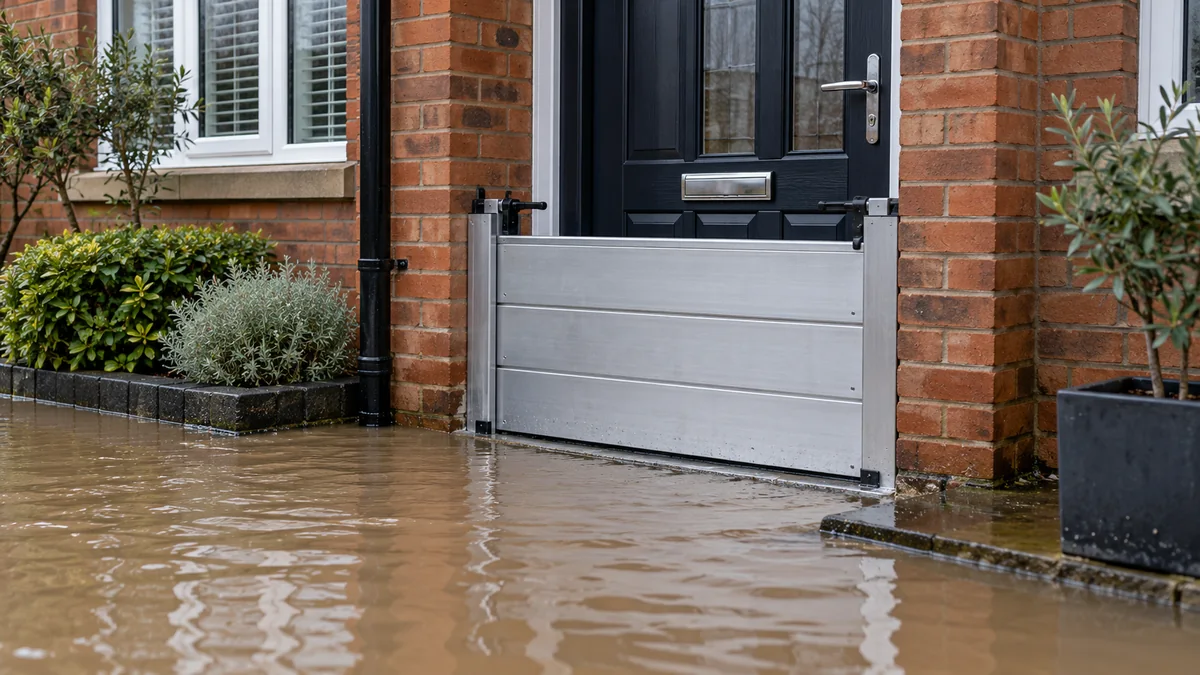
Do flood doors and removable barriers really work?
A flood barrier can reduce water entry, but careful selection and fitting matter.
Read the guide
Will sandbags stop floodwater coming into a house?
Sandbags can slow or divert shallow water, but are not a dependable seal.
Read the guide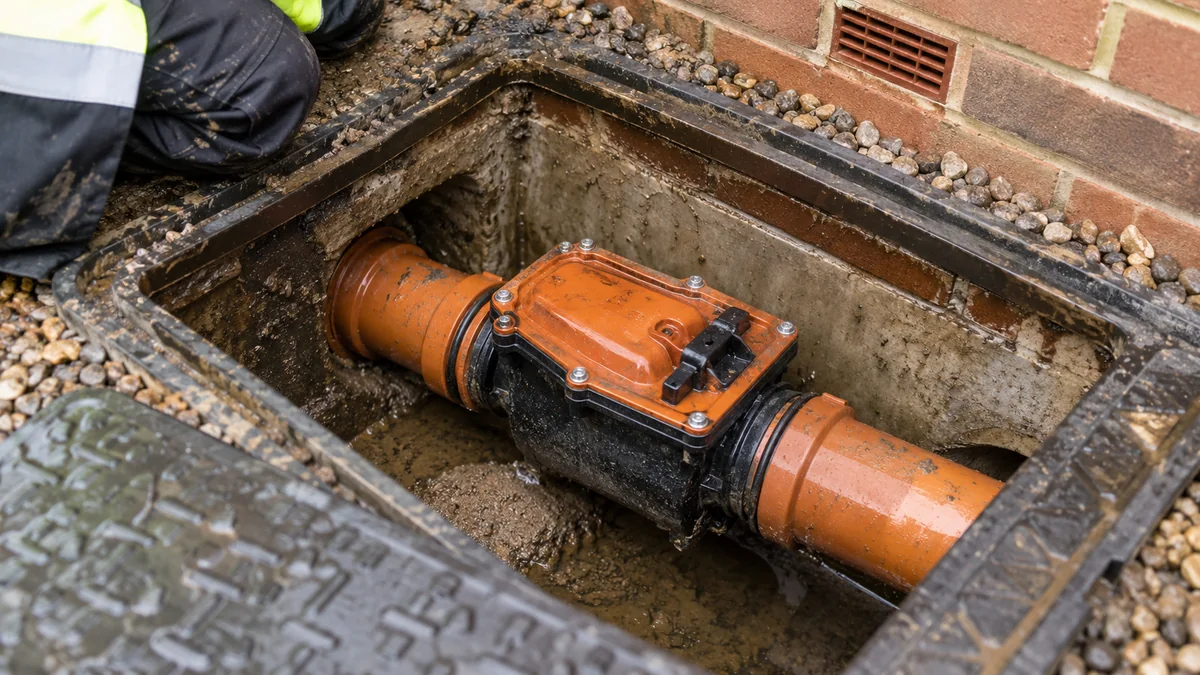
Should you fit a non-return valve to prevent flooding?
A drainage non-return valve may help in some situations, but needs careful design.
Read the guide
Making a previously flooded house easier to repair
Flood resilience often means limiting damage and making recovery quicker, not keeping out every drop.
Read the guide
Should you install a flood barrier at the front door?
A doorway barrier may reduce relatively shallow water entry, provided the rest of the building has suitable details.
Read the guide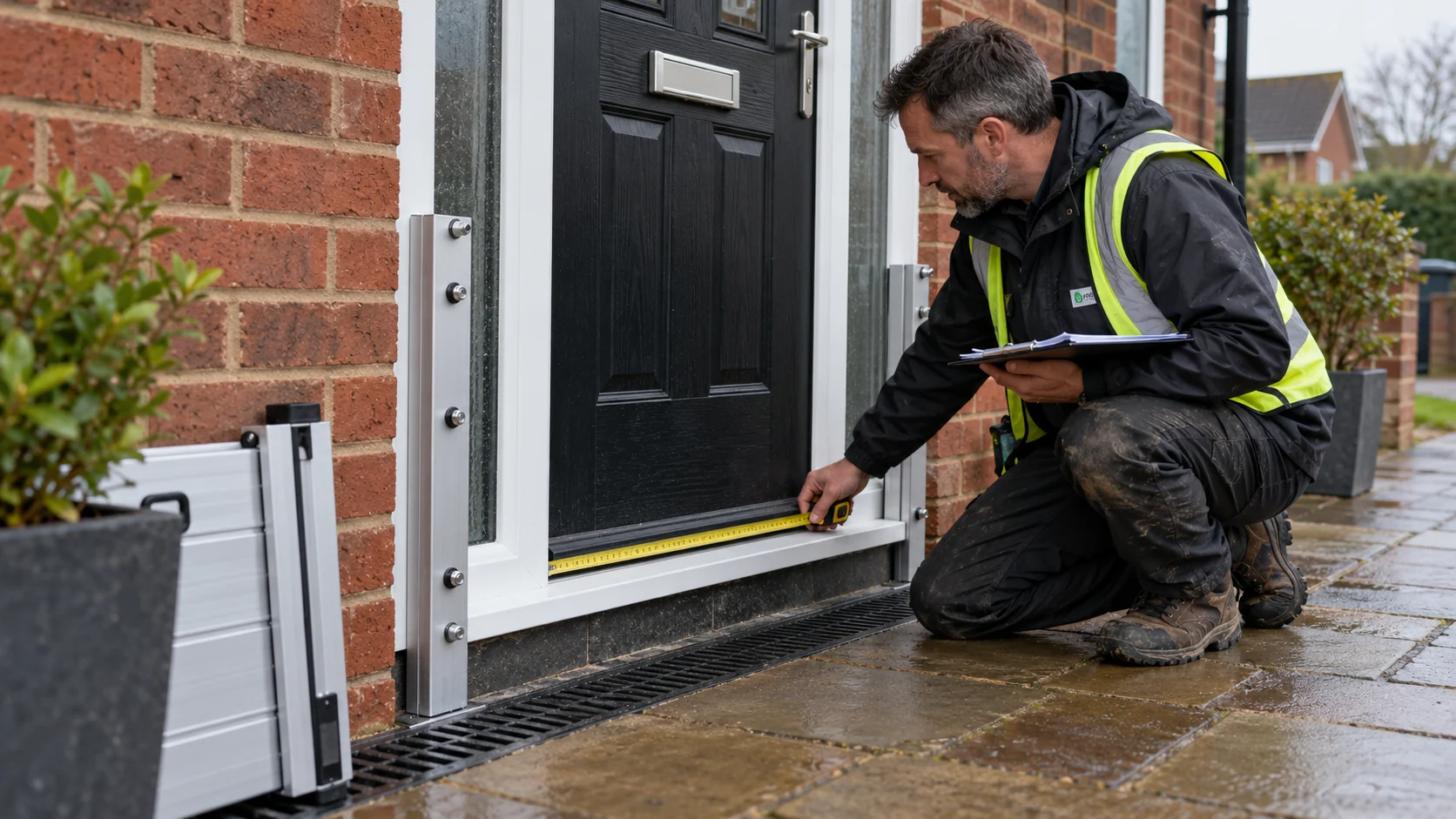
Flood protection quotations: what should be included?
Compare the survey, design, installation and testing, not just the price of a door barrier.
Read the guide →
Can a rain garden help stop flooding around your home?
Rain gardens can slow rainfall runoff, but they need space, suitable ground and somewhere for excess water to go.
Read the guide →
Which ground-floor finishes cope better after flooding?
Materials selected during refurbishment can reduce the cost and disruption of a future flood, but no finish solves every problem.
Read the guide →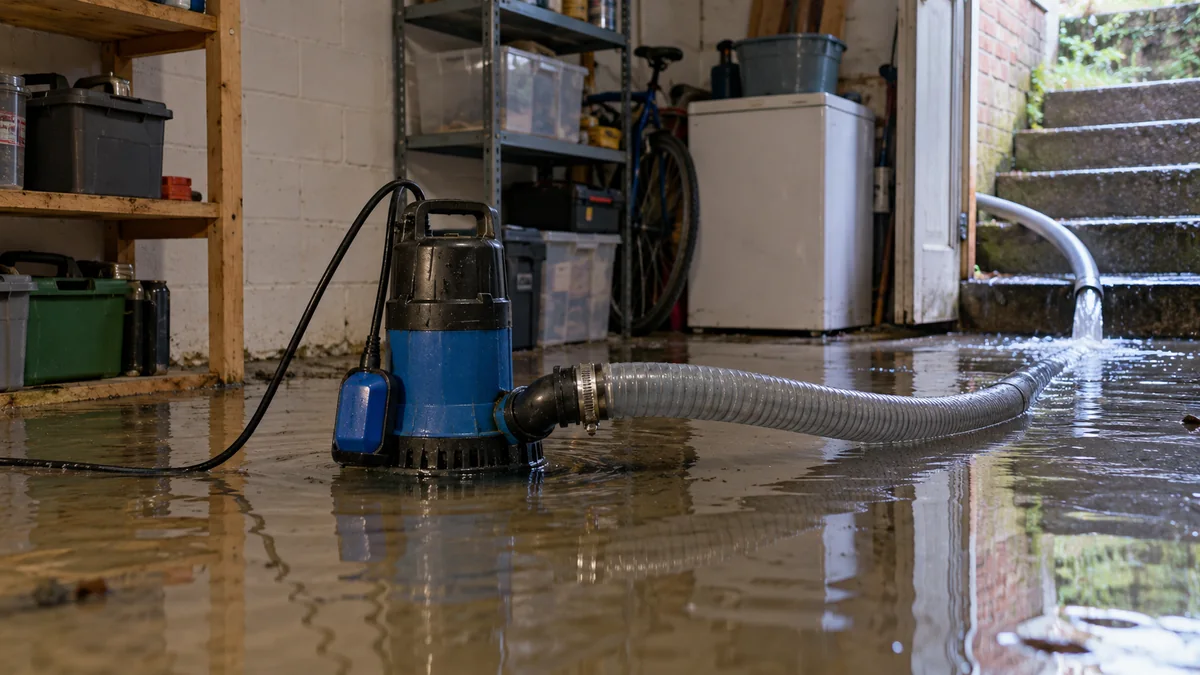
Should you fit a pump to stop your basement or garage flooding?
Pumps may help with some local water problems, but choosing one before diagnosing the source can waste money.
Read the guide →
Why is rainwater getting in under the door threshold?
If water reaches the doorway in heavy rain, the cause is often outside the house rather than inside the door.
Read the guide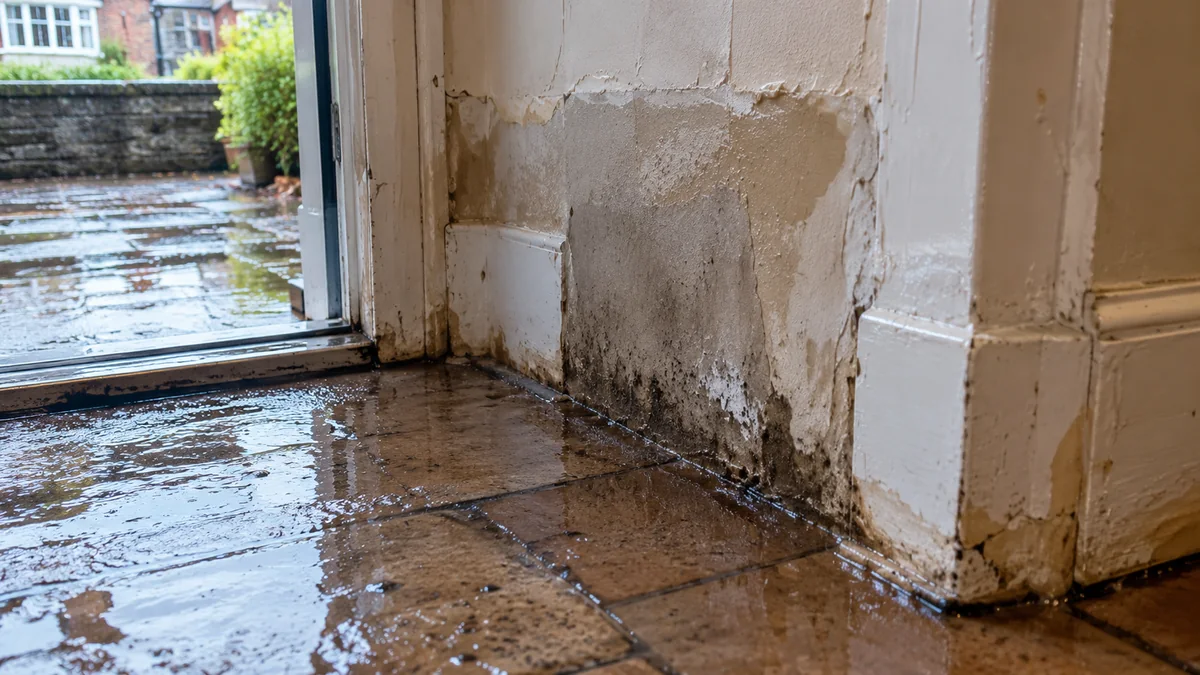
Why is water still getting in after flood repairs?
Repeated flooding often means the earlier work treated the damage but missed the route of entry.
Read the guideAfter flooding

House flooded: what should you do first?
The first priorities are safety, insurance and a careful record of the damage.
Read the guide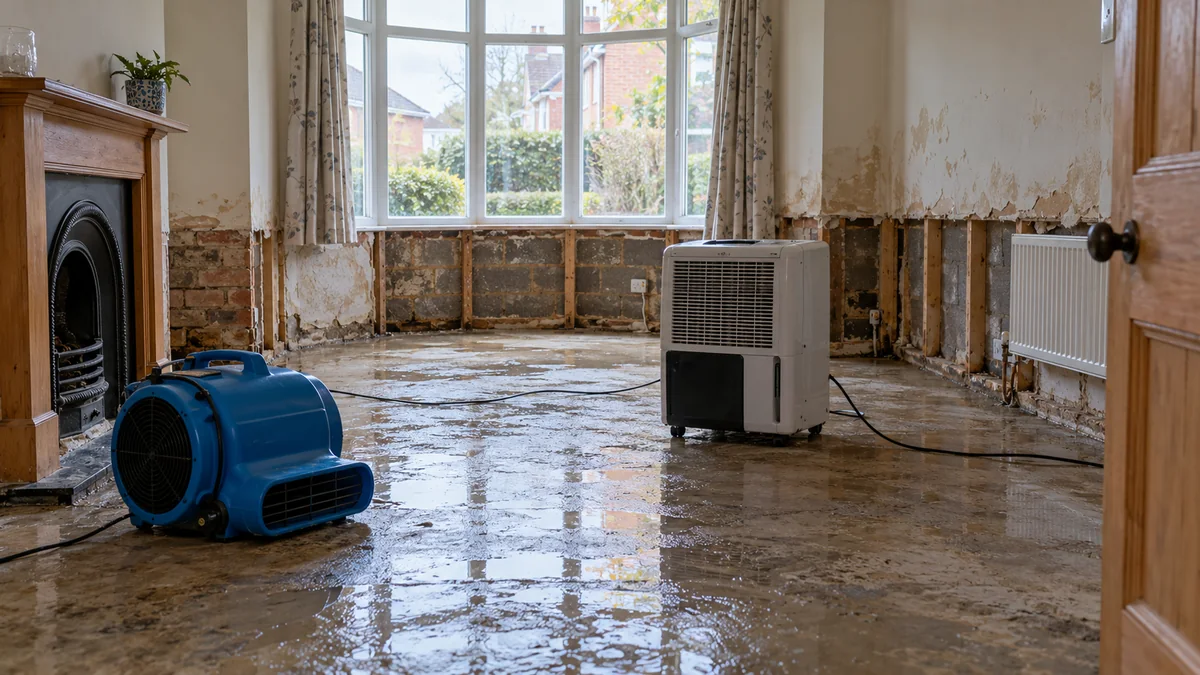
How long does a flooded house take to dry out?
Drying time depends on materials, flood depth and conditions. There is no safe universal deadline.
Read the guide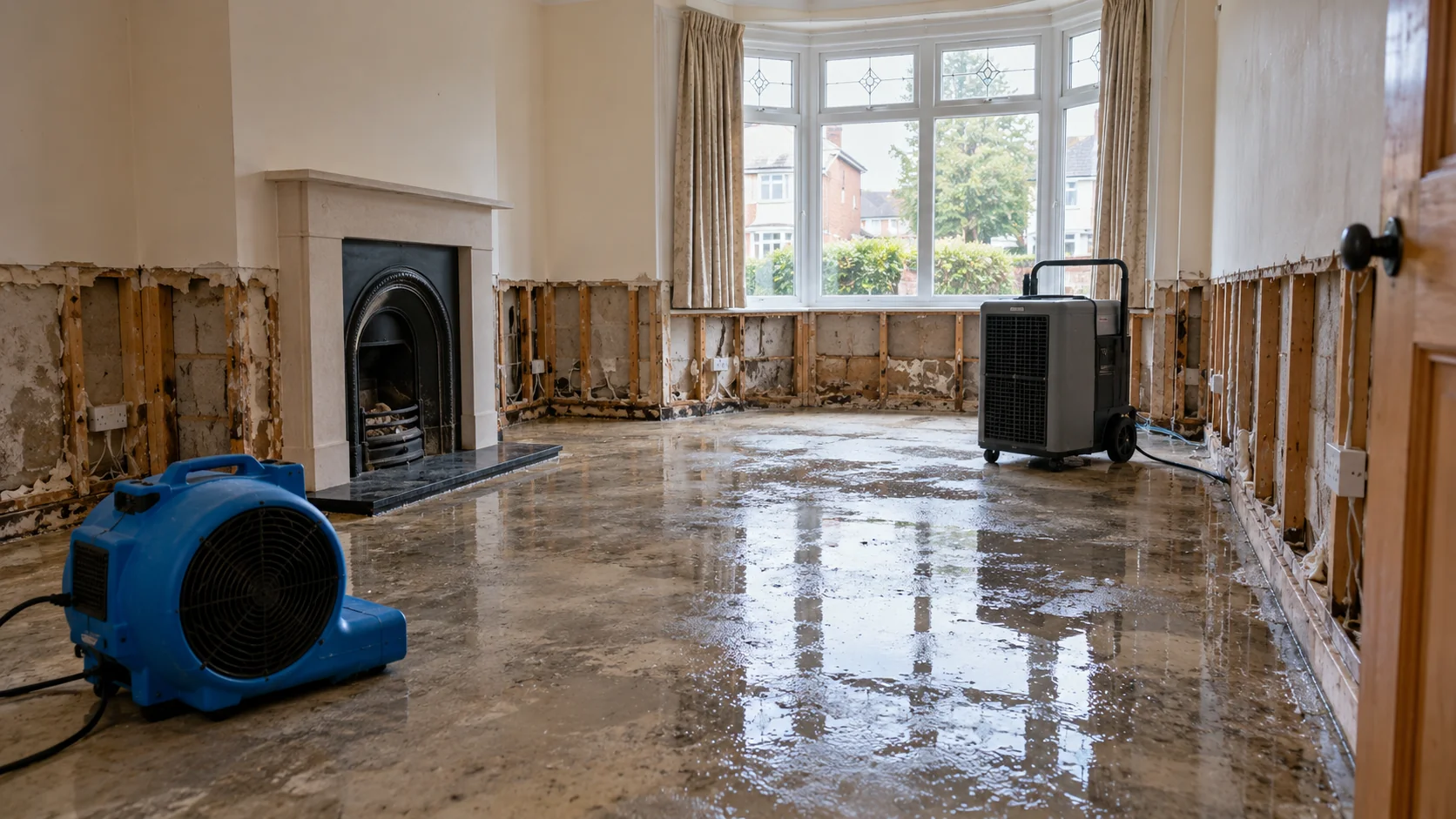
Does flood-damaged plaster always need replacing?
Not every wall needs stripping, but flood contamination and trapped moisture must be assessed.
Read the guide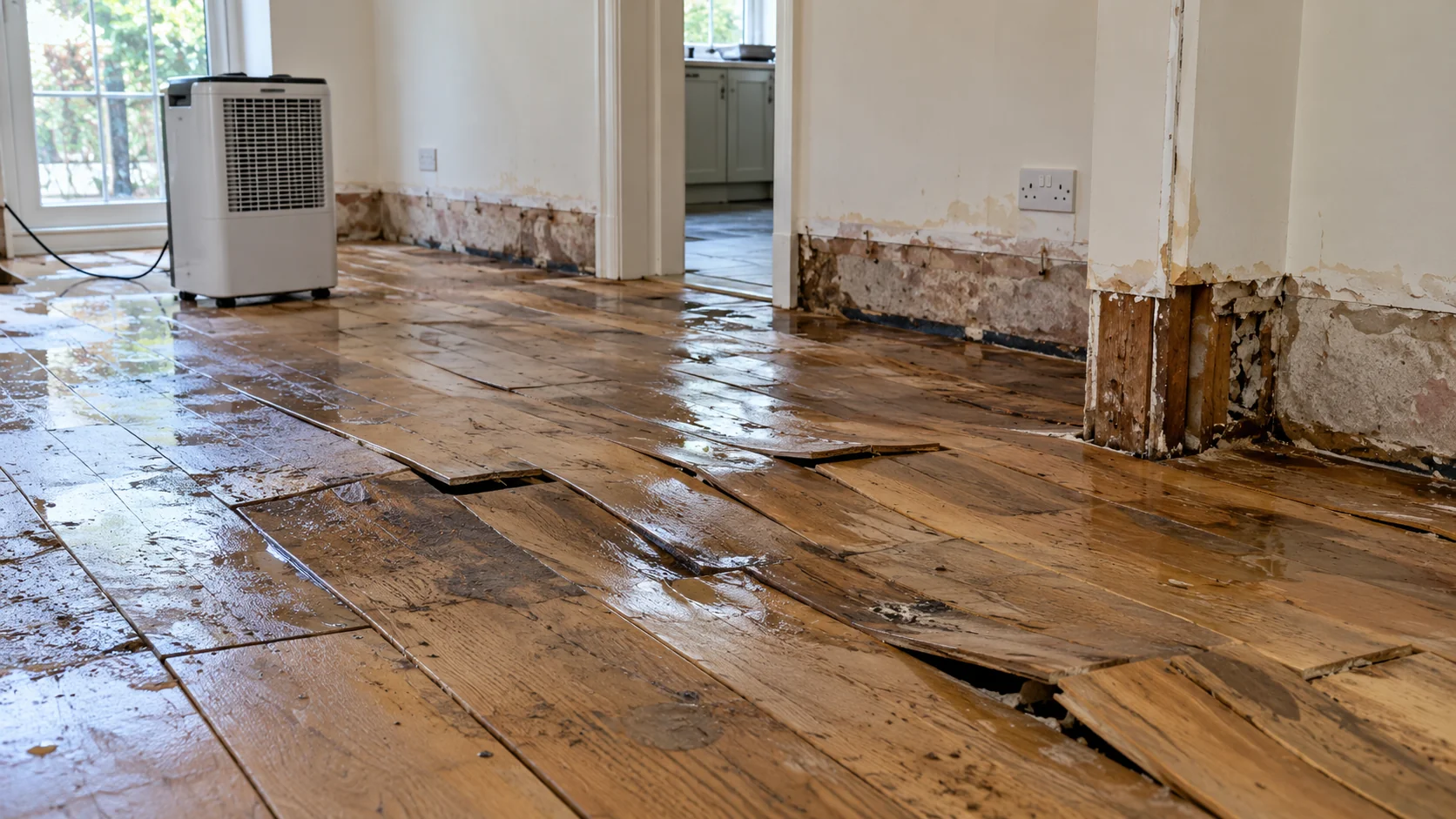
What happens to wooden floors after a flood?
Moisture beneath the floor can be more important than the damage you can see.
Read the guide
Are your electrics safe after flooding?
Do not reconnect flood-affected electrical installations until they have been checked.
Read the guide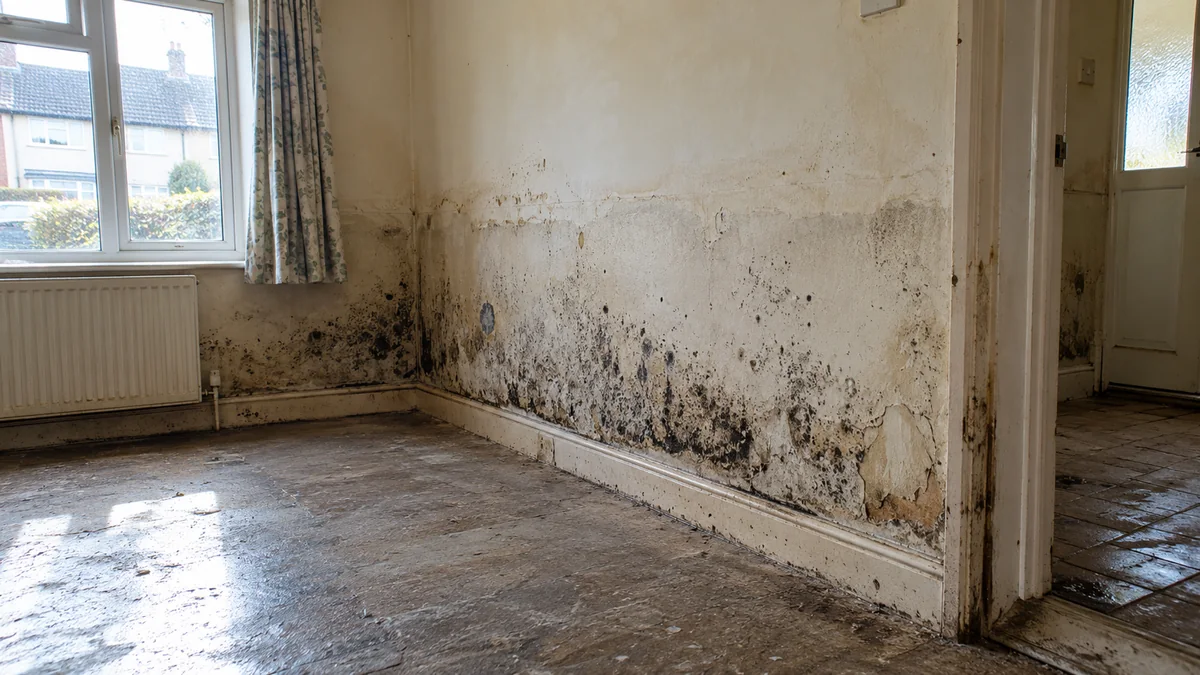
Mould appearing after your house was flooded
Visible mould may be a sign that affected materials have not dried properly.
Read the guide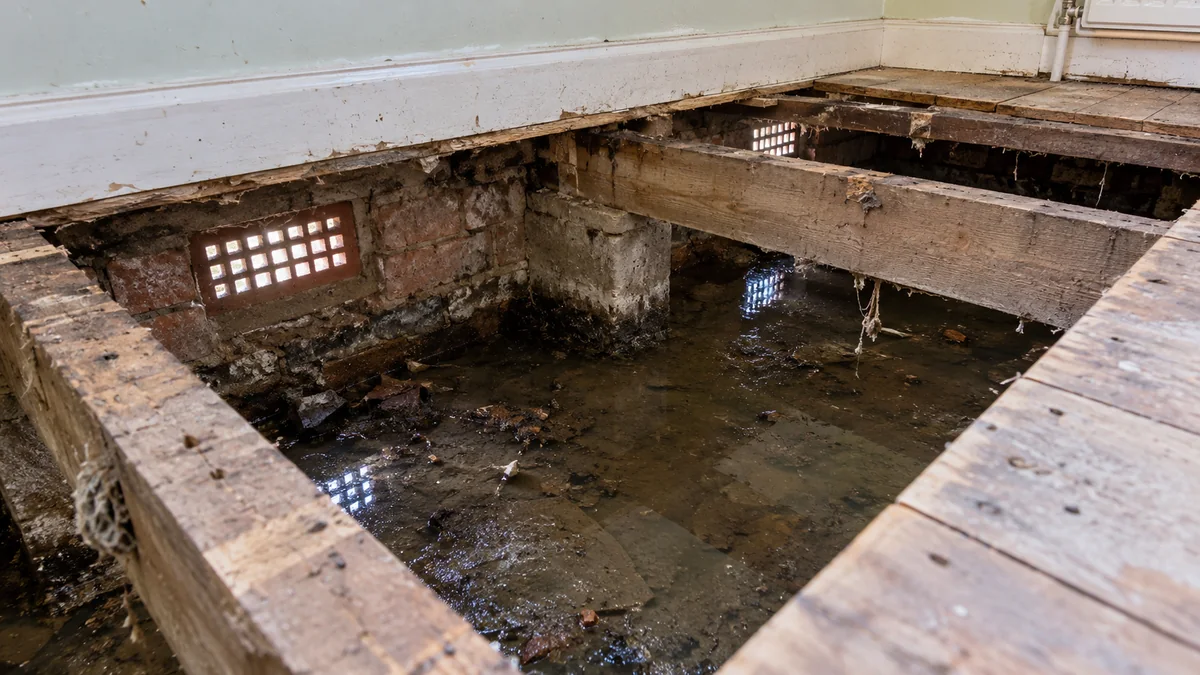
Could floodwater damage the ground beneath your house?
Scouring, erosion and ground movement need careful assessment, especially near shallow foundations.
Read the guide
Floodwater in a crawl space or under a suspended floor
Water beneath a suspended timber floor may bring sewage, sharp objects, damaged wiring and unstable ground.
Read the guide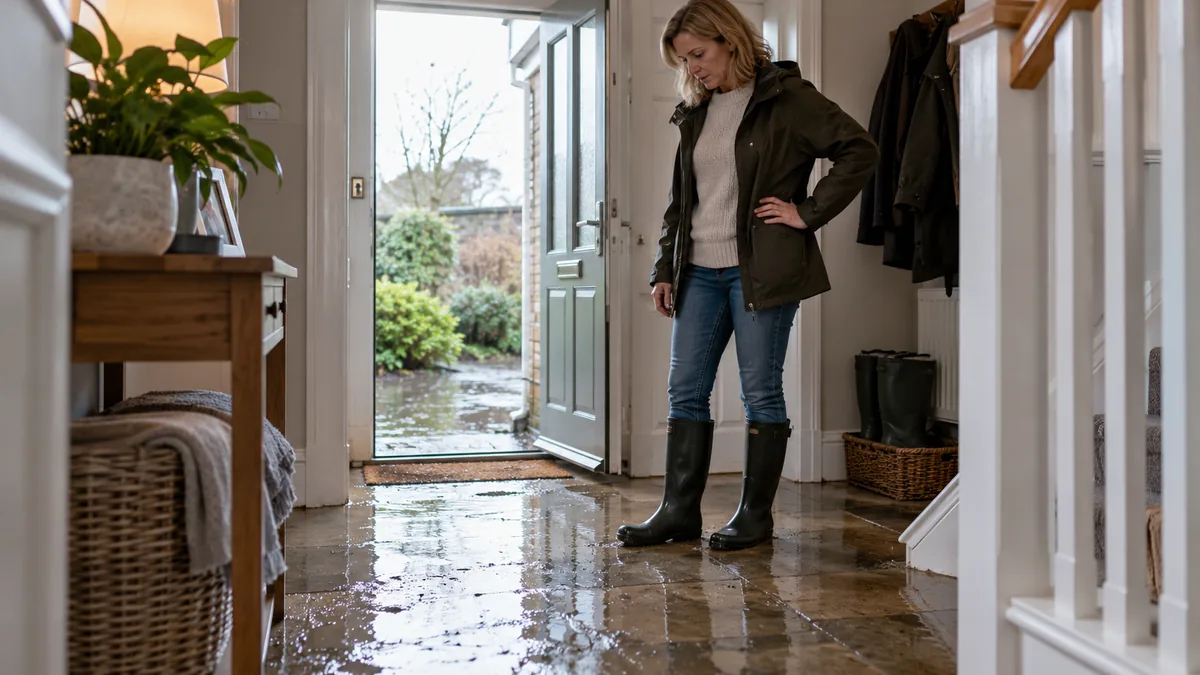
Why does the kitchen still smell after a flood?
Kitchen kickboards, chipboard cabinets, wall linings and floor joints can trap dirty water.
Read the guide
Flood repair survey: what should be checked before work begins?
Before plaster is stripped or floors are lifted, find out what the flood has affected and who is responsible for checking it.
Read the guide →
Flood-damaged kitchen: what can be saved and what needs replacing?
Floodwater can get under plinths and behind cupboards long before damage shows on the doors.
Read the guide →
Flooded wall insulation: can it be dried or must it come out?
Insulation can stay wet behind apparently dry walls, leading to lingering damage and slow recovery.
Read the guide →
After flood repairs: how do you know the house is ready?
Before moving furniture back and redecorating, check that the building has been dried, repaired and made safe.
Read the guide →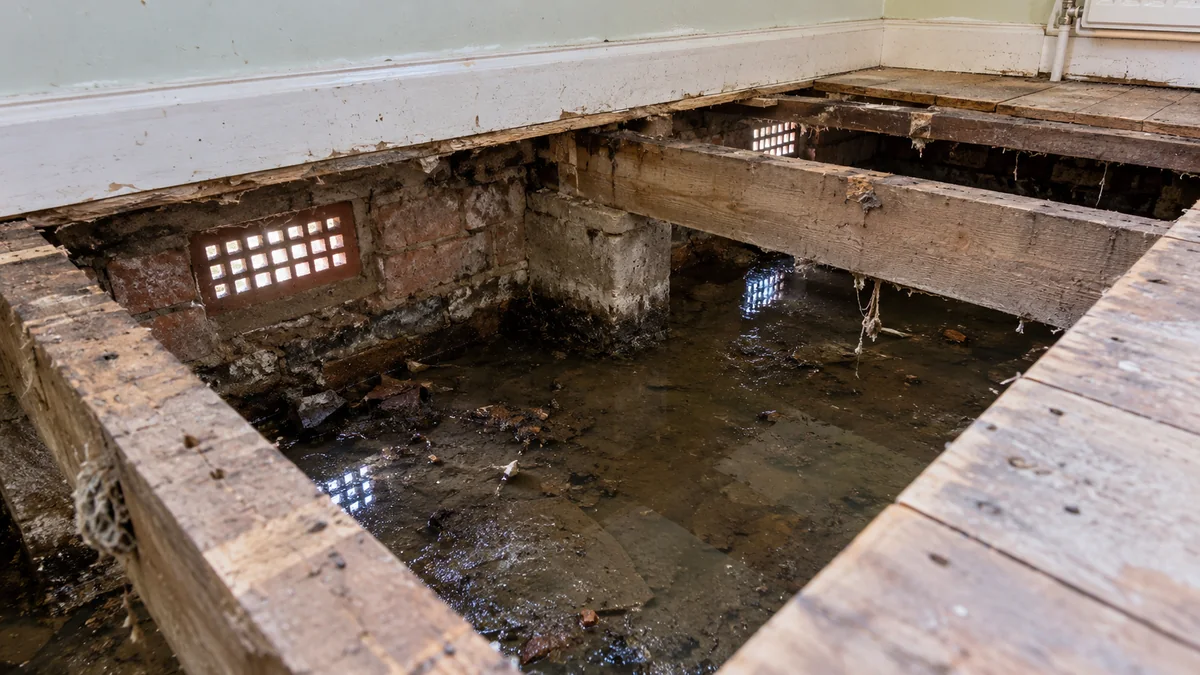
How should a flooded suspended floor be inspected?
A proper inspection looks at hidden moisture, ventilation, joists and what really needs lifting.
Read the guide
Should a flood-damaged timber floor be repaired or replaced?
The right decision depends on the floor type, contamination, drying and what is happening underneath.
Read the guide
Standing water beneath floorboards after a flood
Hidden standing water can slow drying and damage joists, wall bases and finishes.
Read the guide
Flood-damaged skirting boards: repair or replace?
Swollen skirtings and peeling paint may be the visible part of a wider moisture problem at the base of the wall.
Read the guide →
Can kitchen cupboards be saved after a flood?
The doors may look sound while chipboard carcasses, plinths and the space beneath the units remain wet.
Read the guide →
Are floor joists safe after floodwater has reached them?
Wet joists do not automatically mean rotten joists, but concealed bearing ends and poor ventilation deserve proper attention.
Read the guide →