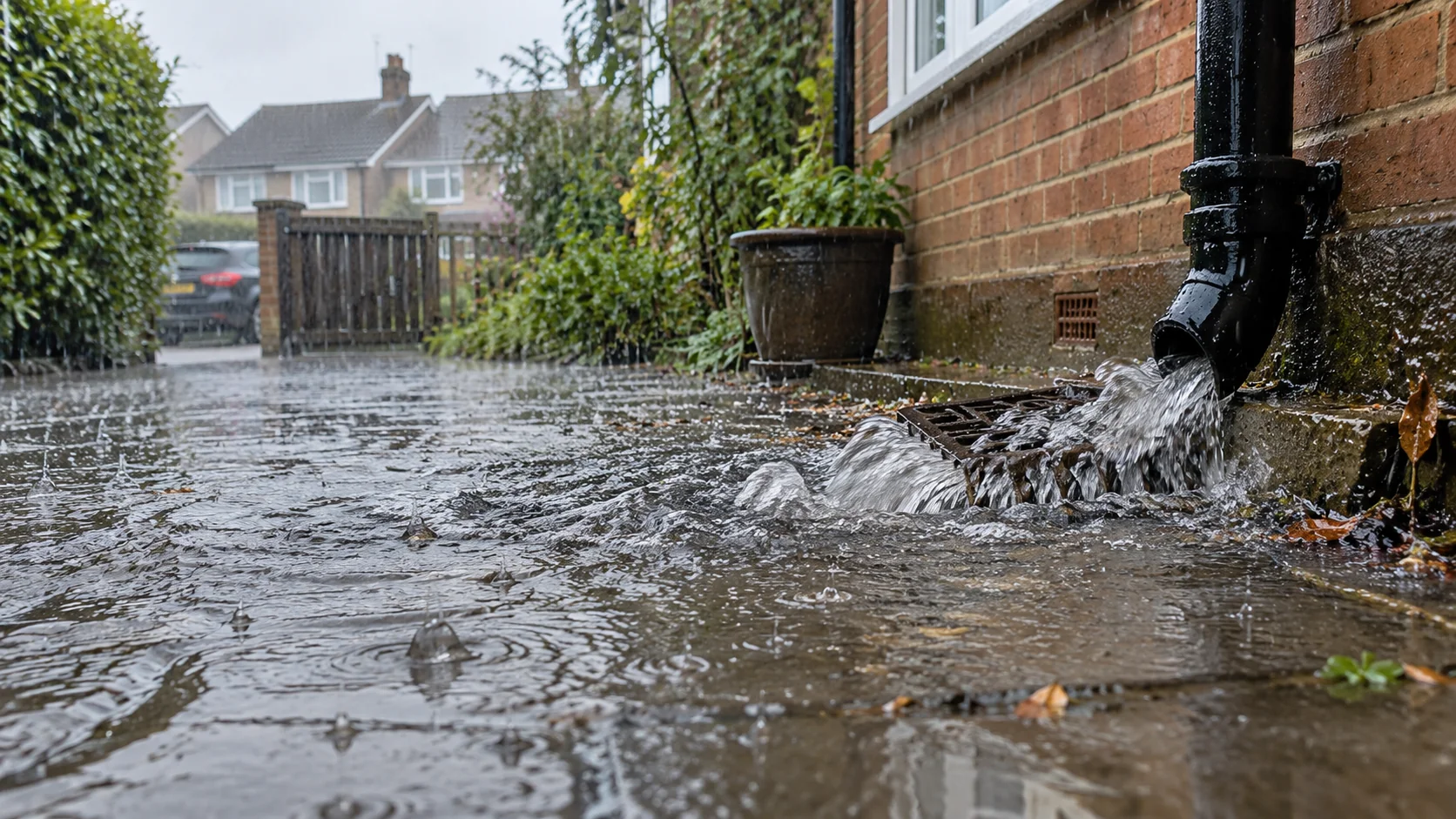
Follow the water, not just the damp mark
If water repeatedly gathers at the foot of a downpipe, begin by watching what happens during rain from a safe position. Does water emerge from a joint, spill over the gutter or rise out of the gully below? Those are different faults, and they call for different repairs. Water can also run along paving before it finds the lowest point, so the wet patch indoors may not be directly opposite the entry point.
Take photographs of the flow and check whether the problem appeared after a new extension, patio or driveway was installed. Changes to ground levels and rainwater connections are easily missed when the visible symptom is a wet wall.
Gutters and gullies can become overwhelmed
Leaves and moss can obstruct a gutter outlet or the gully beneath a downpipe. Clearing an obvious, safely accessible obstruction can help, but working at height or opening a flooded chamber is not a sensible DIY job. A gully that fills and then empties slowly could indicate a blockage beyond the gully; one that only struggles in exceptionally heavy rain may point to capacity or outlet problems.
Do not assume that rainwater is meant to soak away beside the foundations. The appropriate discharge arrangement depends on how the property was built and what drainage is available.
Check what the rainwater system connects to
Some rainwater pipes discharge to a separate surface-water system, some to an approved soakaway and some older properties use combined drainage. A contractor should identify the actual route before recommending a new pipe or soakaway. A camera survey or tracing test may be justified where a hidden connection is suspect.
Never divert a downpipe into a foul drain, highway drain or neighbouring garden without establishing that the connection is lawful and suitable.
Why repeated overflow matters
Persistent discharge beside the house can saturate the ground, erode loose bedding under paving and contribute to moisture problems at low level. It does not, by itself, prove that foundations have been damaged. Serious structural concerns require appropriate assessment rather than speculation.
If the ground is sinking, the wall is moving or a drainage trench is close to shallow footings, make that clear before any excavation.
What to ask a contractor
Ask where the water currently goes, what evidence identifies the fault and whether the proposal includes cleaning, repair, testing and reinstatement. If a soakaway is suggested, ask how its location, ground conditions and capacity have been assessed.
The cheapest quotation can be poor value if it solves the overflow at the downpipe but simply transfers the water to another vulnerable spot.
After the repair
Arrange for the system to be checked during rainfall if practical, and keep outlets clear of leaves and debris. Photograph the completed work and retain any survey records.
If water still reaches the house, investigate levels, thresholds and other routes of entry instead of paying repeatedly for minor pipe alterations.
Check the detail at the wall and the base of the pipe
A downpipe that appears to discharge correctly can still leak at a cracked shoe, joint or underground bend. Look for a fan-shaped splash mark on the paving, washed-out bedding around a gully or persistent damp at the wall base. Those clues can narrow the search, but they do not establish that the wall itself has failed. If the pipe disappears below ground, the condition of the concealed connection may be more significant than the exposed plastic or metal section.
The safest useful inspection is often observational: photograph what happens during rain and note whether water begins to pool before the gully overflows. Avoid dismantling pipework at height or attempting to clear a flooded chamber.
Consider where the extra water is coming from
Roof alterations, extensions and replacement gutters can redirect a considerable amount of water into a downpipe that originally served a smaller area. A new patio can also prevent natural soaking into the ground. If the problem started after building work, check what has changed rather than assuming that leaves are the only cause. A drainage specialist can assess whether the outlet, pipework and receiving system are suitable for the area being drained.
An overloaded combined system may behave differently in a short, intense downpour than it does during ordinary rain. This is one reason a quick hose test may not reproduce the homeowner's experience.
Repair the outlet, not just the visible pipe
A lasting quotation should identify the fault and the discharge route. That might mean cleaning a gully, repairing a joint, replacing a damaged underground section or considering a suitable rainwater drainage design. Where a soakaway is suggested, its location and ability to accept water must be assessed; simply digging a pit in saturated ground is not a dependable repair.
If standing water has undermined paving or created a depression beside the house, ask how those surfaces will be made good once the drainage fault is fixed. Cosmetic reinstatement without correcting the water source may be short-lived.
Official guidance and independent advice
Flooding can become dangerous quickly. Use official warnings and advice during an incident; this article is not a live risk assessment.
Prepare for flooding · Flood-proofing and recovery · National Flood Forum · Citizens Advice