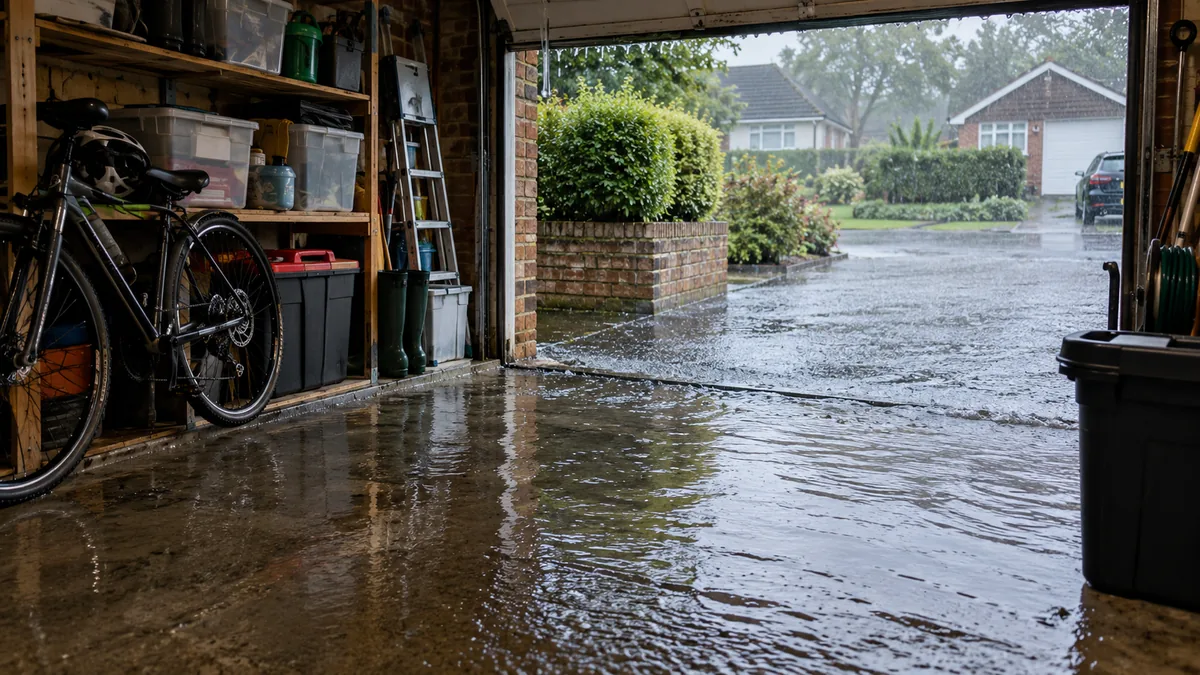
Start at the entrance
Many garages sit at the bottom of a sloping drive. Water runs straight towards the door and can overwhelm a small channel drain in minutes.
A garage is often lower than the driveway, so relatively shallow runoff can travel under an up-and-over door. Look for a slope towards the opening and whether the existing channel drain has a suitable outlet. Garage door seals have limits, especially where water builds up across the full width of the threshold. Do not assume a replacement door will fix an external drainage problem. If a garage is attached to the house, also inspect any connecting door and low-level service penetrations before concluding that the living accommodation is unaffected.
Check what happens to collected water
A drainage channel is only as effective as its outlet. Silt, leaves and a blocked connection may allow water to overtop the grille.
Before moving equipment, consider electricity, fuel, chemicals and stored materials. Water may have contaminated the floor, entered sockets or damaged electrical tools. Have flood-affected electrical installations checked by a qualified electrician rather than switching them on to test whether they work. Take photographs for an insurance claim, making a note of what was stored in the garage. Expensive equipment should not be discarded before following the insurer's instructions unless it creates an immediate hazard.
Look at the threshold
A correctly designed threshold can reduce shallow runoff entering, but it must not create a trip hazard or interfere with safe operation of the door.
A contractor's proposal might involve changing driveway falls, repairing a channel drain or providing a suitable barrier. Ask where the intercepted water will discharge and whether there is a risk of sending it to neighbouring land. Sumps and pumps need an appropriate destination and a plan for power failure. The most reliable solution is usually one that reduces the amount of water reaching the garage rather than depending entirely on removing it once it is inside.
Other routes
Water can enter through side walls, service penetrations or even rise through floor joints. That calls for a different approach from simply changing the door.
Avoid storing vulnerable items low down
If repeated flooding is possible, keep electrical items, fuels and important belongings safely above the likely water level while the cause is being addressed.
Get the levels checked
Ask a contractor to explain driveway falls, drainage capacity, discharge route and any proposed changes to the garage entrance.
Work out whether the water is coming in or rising up
During a downpour, a garage can fill because rain runs down the drive, because a gully overflows or because groundwater enters through the floor or walls. Water marks around the door point towards a different remedy from widespread dampness at wall bases. When it is safe, photograph the first point at which water appears, not just the garage after it has filled.
Why the driveway slope matters
Garages are often built lower than the house, with the drive sloping towards the door. A channel drain in front of the threshold may intercept water, but only where it has enough capacity and a suitable outlet. If the channel connects to a blocked soakaway or already surcharged drain, it may simply overflow at the very point you want to protect.
Take care with equipment and stored belongings
Do not enter standing water if electrical sockets, extension leads, machinery or a consumer unit could be affected. Keep children away, and ask a competent electrician to assess flood-exposed equipment before use. Stored paints, fuels and chemicals can create additional hazards. Photograph damage for insurance purposes before disposing of items, unless immediate safety requires it.
What a drainage quotation should explain
Ask the contractor to set out where water will be collected, its intended discharge point and whether the scheme includes cleaning, testing and reinstatement. A proposal merely to install a larger grille says little about the performance of the system. Consider whether outside ground levels need correcting at the same time.
Repeated wetting may call for more than drainage
A garage used as a living space or containing valuable equipment deserves particular attention to wall construction, floor finishes and safe electrical fittings. Where water may still enter during an exceptional storm, suitable thresholds and more resilient finishes may reduce the damage. The purpose of repairs should be clear: reducing ordinary runoff or providing broader flood protection.
Reliable further information
For current warnings, official flood-risk maps and safety advice, use the relevant government service. This website cannot assess live conditions at your home.
Government flood guidance · National Flood Forum · Citizens Advice