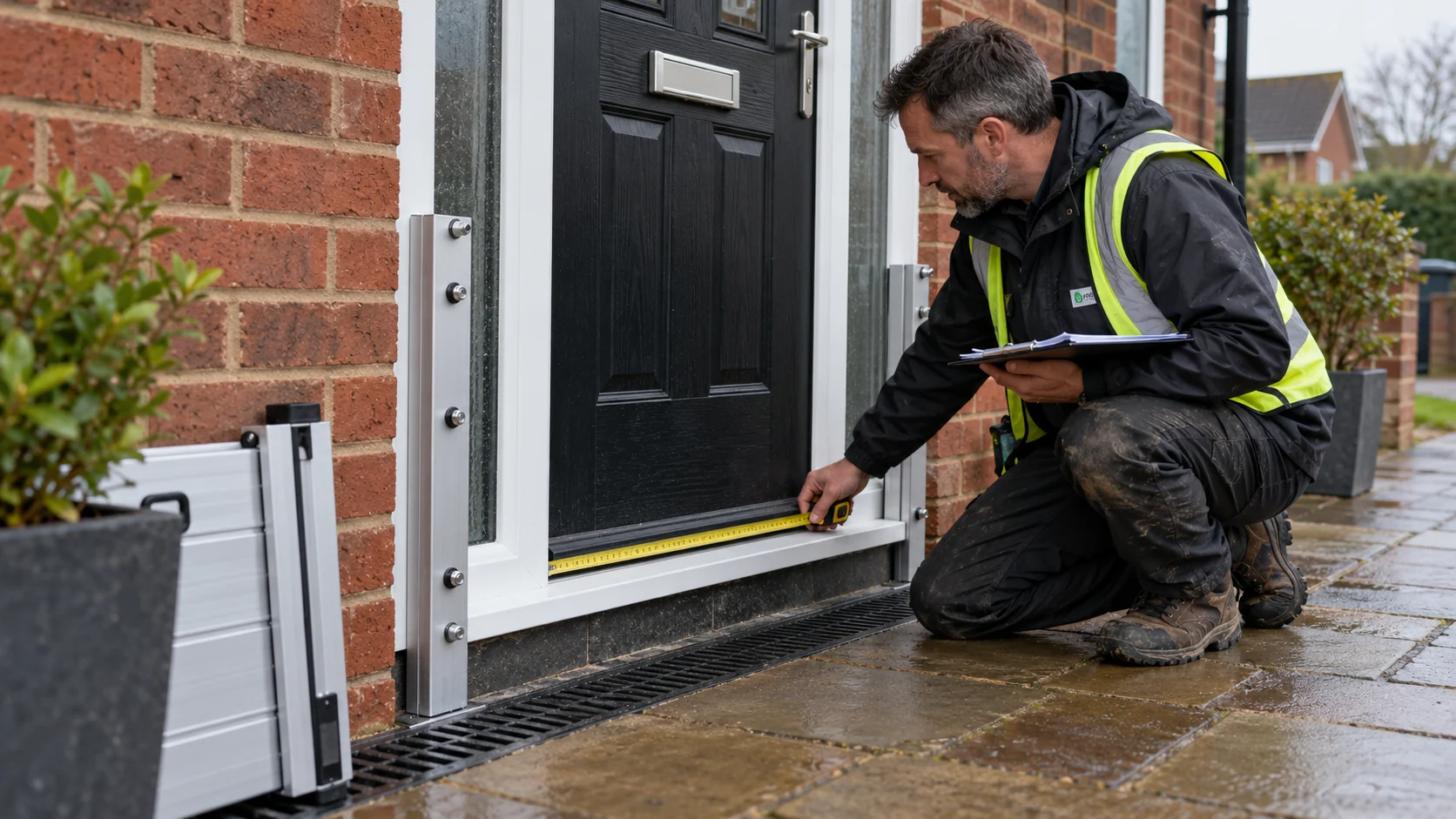
Start with the flood route
Water can enter through doors, airbricks, drains, walls, floors and concealed openings. Before anyone sells a product, ask them to explain the expected flood sources, depths and likely routes. An independent property flood resilience survey may be sensible where the exposure is substantial.
The price of a flood barrier can be misleading if it covers only the visible doorway. Water may enter through airbricks, wall joints, drains or service penetrations at a similar level. A proper quotation needs to show which openings are included and what assumptions have been made about the expected water depth and duration. Ask whether there is a property-level survey, rather than a salesperson choosing products from a few photographs. Installation details can matter more than the advertised performance of the barrier itself.
Protection is more than a flood board
Barrier height and material are only part of the picture. Seals, junctions, thresholds, drains and ground conditions can determine whether the scheme works. A door barrier cannot prevent sewer backup or water rising through a floor.
Compare quotations by specification, not only by total cost. Check whether surveys, groundworks, electrical changes, commissioning, training and future maintenance are included. Are removable barriers stored somewhere accessible, and could everyone who needs to fit them do so safely? Some measures also need regular checks or replacement seals. A cheaper offer can become expensive if these obligations are excluded or if a separate contractor must return to correct the drainage falls.
Ask about pressure and structural limits
Keeping deep floodwater outside may impose damaging pressure on walls and floors. Not every home should be sealed to the same level. A survey and design should account for structural consequences and safe water entry where appropriate.
Flood resistance and flood resilience are different approaches. Sometimes it is sensible to resist shallow water at openings; in other circumstances, making the interior easier to clean and dry may be safer and more realistic. Ask the specialist to explain the limits of the design and what happens when those limits are exceeded. Be especially cautious of claims that any one product makes an entire house floodproof.
Installation, use and storage
Ask who will fit the equipment, whether alterations to walls or frames are required and whether any approvals apply. Can the person living in the house deploy the barrier in time? Heavy removable boards may be impractical for someone who cannot safely lift them.
Maintenance and test procedures
Find out how seals will be inspected, how often components need replacing and how installations will be tested. Ask for written instructions and a demonstration, not just a product warranty. Store removable parts where they are accessible during bad weather.
How to compare quotations
Request itemised prices for survey, specification, products, building work, commissioning and any ongoing maintenance. Check exclusions and who takes responsibility if another entry route remains untreated. A cheaper quote is not a saving if it addresses the wrong problem.
A cheap barrier is not a complete flood strategy
Two quotations for apparently similar flood doors may cover very different work. One may include surveying airbricks, penetrations and drainage connections; another may price only the door product. Ask for a schedule of every vulnerable opening and the reasoning behind the proposed level of protection.
Be cautious of anyone claiming a property can be made entirely floodproof without explaining the expected depth, duration and source of flooding.
Separate the measures and the preparatory work
Breaking out paving, preparing masonry, installing channels or rerouting drains may cost more than a product itself. A clear estimate distinguishes labour, materials, testing, reinstatement and maintenance, making the cost of each decision visible.
If the property has already flooded, consider whether some changes can sensibly be combined with insured reinstatement. Keep optional resilience upgrades separately identified.
Ask what happens after installation
You need to know who maintains seals and moving parts, whether replacement components can be obtained and what an inspection should include. A barrier that is difficult to operate or a pump without a maintenance plan may offer far less practical protection than expected.
Request handover instructions and ask whether the contractor has considered power outages, access for people with reduced mobility and alternative water-entry routes.
Useful UK guidance
These independent resources explain flood risk, planning ahead and recovering after damage. Always follow emergency services and official warnings if flooding is happening now.
GOV.UK flood preparation · National Flood Forum property protection · Government property adaptations · Citizens Advice