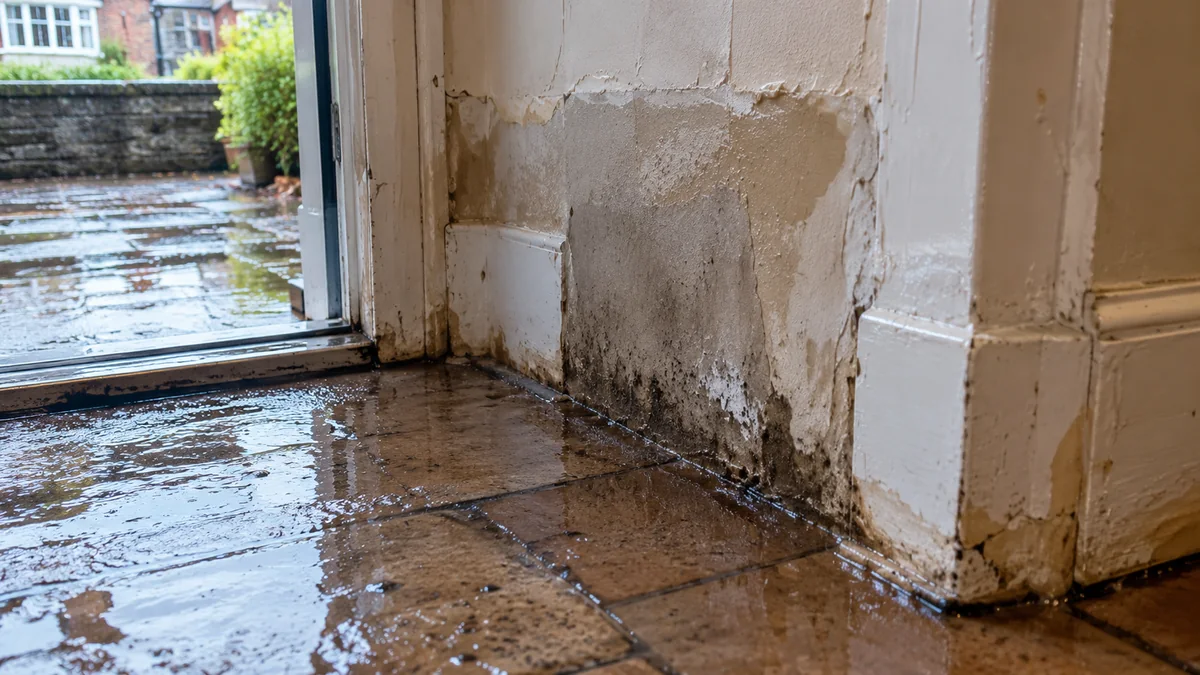
First separate fresh water entry from lingering drying
A room can remain damp for a long time after a serious flood, but that is different from new water actively getting in during each spell of rain.
The timing of the symptoms matters. If wetting increases after rainfall, look again for an unresolved entry route.
A useful record is more revealing than a photograph of a damp patch after the event. Note when water first appears, where it travels and whether it follows prolonged rainfall, a short cloudburst or the use of plumbing. Photograph external levels, gullies and the lowest openings while the problem is happening, but only from a safe position. If the same wall stays damp even through dry weather, residual moisture or another defect may be involved. A contractor needs to establish which problem is present before another round of decoration.
The earlier work may have addressed the symptoms only
It is very common for decoration, plaster repair or floor replacement to be carried out without adequately dealing with the route the water takes into the building.
The result is a neater room that floods again.
Revisit what was specified in the previous quotation and compare it with what was actually completed. A replacement floor covering will not prevent water crossing a poorly designed doorway. Repointing a low wall will not increase the capacity of a blocked surface-water system. Nor will waterproof paint necessarily deal with water rising behind it. Ask the original contractor for drawings, drainage connection details, completion photographs and any test results. Those records may explain whether the problem is an incomplete repair or a separate route of entry.
Common missed causes
Typical examples include paving or driveways that still fall towards the house, threshold details that remain too low, blocked or undersized drains, failed channel drain outlets and water bypassing barriers through adjacent details.
In other cases, the doorway has been improved but water is now entering through airbricks or another low-level opening.
When obtaining a fresh opinion, ask the specialist to identify the expected depth and path of floodwater and the possible consequences of keeping it out. Protection across a doorway may redirect water to an airbrick, adjoining wall or neighbouring property. The most durable proposal may combine external falls, drainage maintenance and more recoverable internal finishes, rather than rely on one product. If the previous work came with a guarantee, check its actual scope and notification requirements before anyone disturbs the installation.
Look outside as carefully as you look inside
Changes to patios, ramps, landscaping and neighbouring levels may explain why a repaired room still has problems. What matters is the whole route the water follows, not just the final damp patch.
That is why diagnosis often starts outdoors.
Ask for a survey that explains cause and scope
A useful survey should identify the likely route of entry, what evidence supports that view and how the proposed work deals with it.
If a quotation jumps straight to replacing damaged finishes again, without explaining why the flooding recurs, it may not be solving the real problem.
Use the opportunity to improve resilience
If the property is clearly vulnerable, repeat flooding may justify more resilient choices during repair, such as better drainage details, protection to low-level openings and materials that are easier to recover after wetting.
That should be thought through carefully rather than treated as an afterthought.
Map the recurrence instead of repeating the same repair
Write down when each episode occurred, the weather conditions and exactly where water first appeared. A downpour that causes immediate puddling at a threshold points to a different route from dampness emerging days later along an internal wall. Photographs, old invoices and survey reports can reveal what earlier contractors attempted.
If a repair has repeatedly failed, ask the next investigator to assess the original assumptions. A new coat of render, replacement plaster or fresh sealant should not be the starting point without evidence.
Water can bypass a successful repair
A doorway barrier may keep water out of the opening while runoff enters an airbrick or service penetration nearby. A channel drain may intercept surface water but overflow because the pipe beyond it is blocked. The visible location of a leak is not necessarily its entry point.
The contractor should explain the whole route from water source to the affected part of the building. That explanation should form part of the written specification.
Plan both resistance and recovery
For some properties, keeping low-level floodwater out may be realistic; for others, resilience measures that reduce contamination and make repairs easier can be more sensible. Ground-floor finishes, access beneath units and the position of vulnerable services may deserve attention during reinstatement.
If insurers are involved, distinguish the remedial work needed to restore the building from optional upgrades intended to reduce future disruption.
Official guidance and independent advice
Flooding can become dangerous quickly. Use official warnings and advice during an incident; this article is not a live risk assessment.
Prepare for flooding · Flood-proofing and recovery · National Flood Forum · Citizens Advice