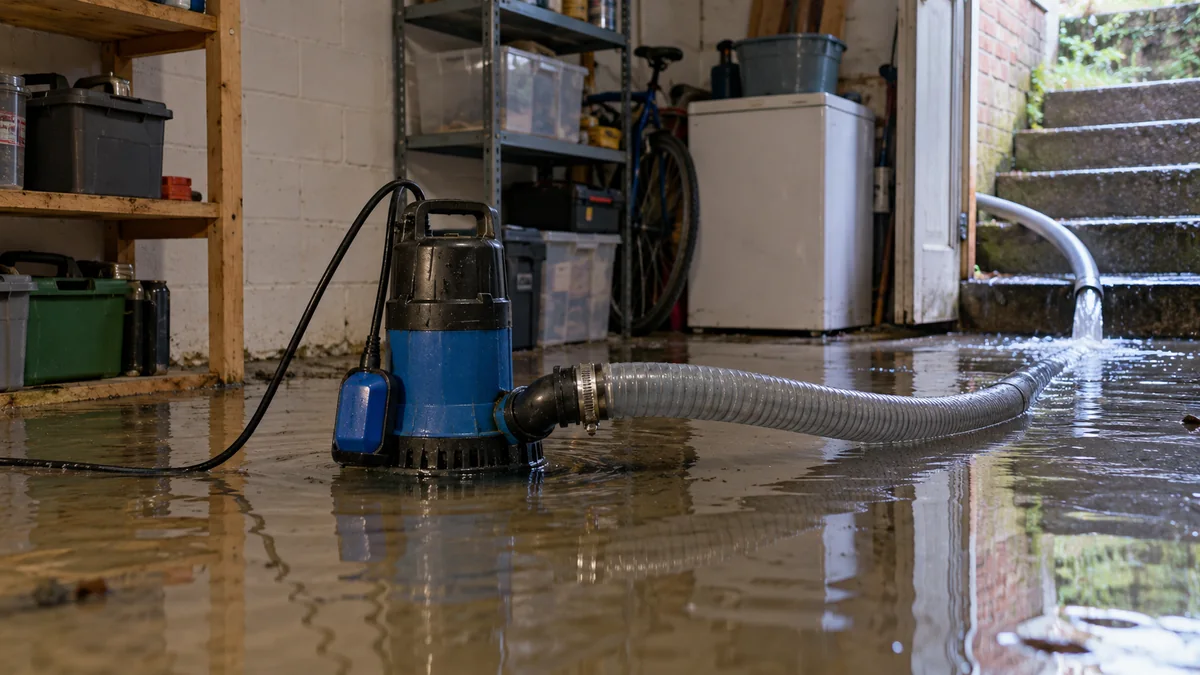
Understand where the water comes from
Surface runoff entering a garage, water rising through a basement floor and a backed-up drain are different faults. A pump does not change external ground levels or repair a collapsed pipe. Start by observing when the problem happens and where water first appears.
A pump needs a safe discharge
Water must go somewhere appropriate and lawful. Pumping it into an overloaded sewer, across a pavement or towards a neighbour may move the problem rather than solve it. Get agreement about the receiving drainage system and any required permissions.
Power cuts and alarms
Flooding and power failure sometimes arrive together. Consider the suitability of backup power, alarm systems and maintenance access. Never use electrical equipment in standing floodwater or try to improvise mains connections in a wet environment.
Sumps, filters and solids
Sump size, expected flow, sediment and debris affect reliability. Domestic pumps designed for clean water may not cope with sewage or large solids. Ask for calculations or a design basis rather than buying the largest pump on the shelf.
Water pressure and the basement structure
Basements and retaining structures can be affected by groundwater pressure. Simply pumping out water may not be safe if the structure has not been assessed. For repeated or serious basement flooding, seek specialist design advice.
Questions before installation
What flow is expected, where will water discharge, how will failure be detected and who will service it? Ask about test access, noise, replacement parts and ongoing running costs. A pump can form part of a solution; it is rarely the whole investigation.
Pumping does not remove the cause
A pump may keep a local sump below a chosen level, but it cannot make a basement waterproof or cure a collapsed drain. Water can still enter through walls, joints and services. The first task is to identify whether the problem is groundwater, rainwater runoff, an internal leak or foul drainage.
If the source is sewage or there may be electrical hazards, do not attempt improvised pumping. Appropriate equipment and safe access are essential.
Reliability is the real design question
Any pumped system needs a suitable discharge destination, accessible maintenance, a power supply and a means of warning the owner when it fails. In properties vulnerable during storms, ask what happens if electricity is lost at exactly the time the pump is most needed.
A pump that works on installation day may still fail because of silt, blocked floats or an overlooked alarm. Servicing and testing are part of the system, not optional extras.
Compare complete systems rather than pump prices
A quotation should describe the sump, pipework, outlet, non-return arrangements, alarm, electrical work and what the contractor will commission and test. It should also explain the expected inflow and why the chosen equipment is suitable.
Where a basement is being converted into living accommodation, specialist waterproofing design and compliance may be necessary. A low-cost portable pump is not a substitute for that work.
Checks to build into ownership
The useful questions continue after a pump is fitted. Who cleans the sump, checks the float switch and confirms that the warning alarm is operating? What will happen if the discharge pipe freezes or its outlet becomes submerged? Is there a safe way to isolate the system for servicing? These details are easy to overlook when comparing purchase prices. Ask the installer to demonstrate normal operation, a simulated high-water alarm and any battery backup, where provided. Keep service information somewhere accessible. If the pump is part of a basement waterproofing system, arrange inspections according to the system designer’s recommendations rather than assuming the equipment can be forgotten about.
Capacity is not the only specification
A pump needs to cope with the expected inflow, but the discharge arrangement matters just as much. Water must be taken to a lawful and suitable outlet that will still function when local drains are full. A powerful pump that empties into an already surcharged system can be ineffective or cause problems elsewhere.
Plan for power loss and breakdown
Flooding and electricity failures can happen together. Ask what happens if the pump loses power, its float switch jams or debris blocks the inlet. A suitable alarm, accessible maintenance point and, where justified, backup arrangement may matter more than a nominal pump rating on a product label.
Do not pump against unsafe water pressure
In some basement situations, rapidly lowering water inside while groundwater remains high outside can create damaging pressure across walls or floors. Never treat pumping a flooded cellar as routine DIY work where the structure may be at risk. Seek specialist advice on timing and method, especially after extensive flooding.
A serviceable installation
Ask who will inspect and maintain the pump, how a failure will be noticed and whether valves and outlets can be tested. Keep service records and make sure householders know which controls are safe to use. Pumps are mechanical equipment; they reduce some risks but do not remove the need to understand why water is entering.
Useful UK guidance
These independent resources explain flood risk, planning ahead and recovering after damage. Always follow emergency services and official warnings if flooding is happening now.
GOV.UK flood preparation · National Flood Forum property protection · Government property adaptations · Citizens Advice